
New PMP Question Types in 2026: Case Sets, Drag-and-Drop, and Graphics Explained
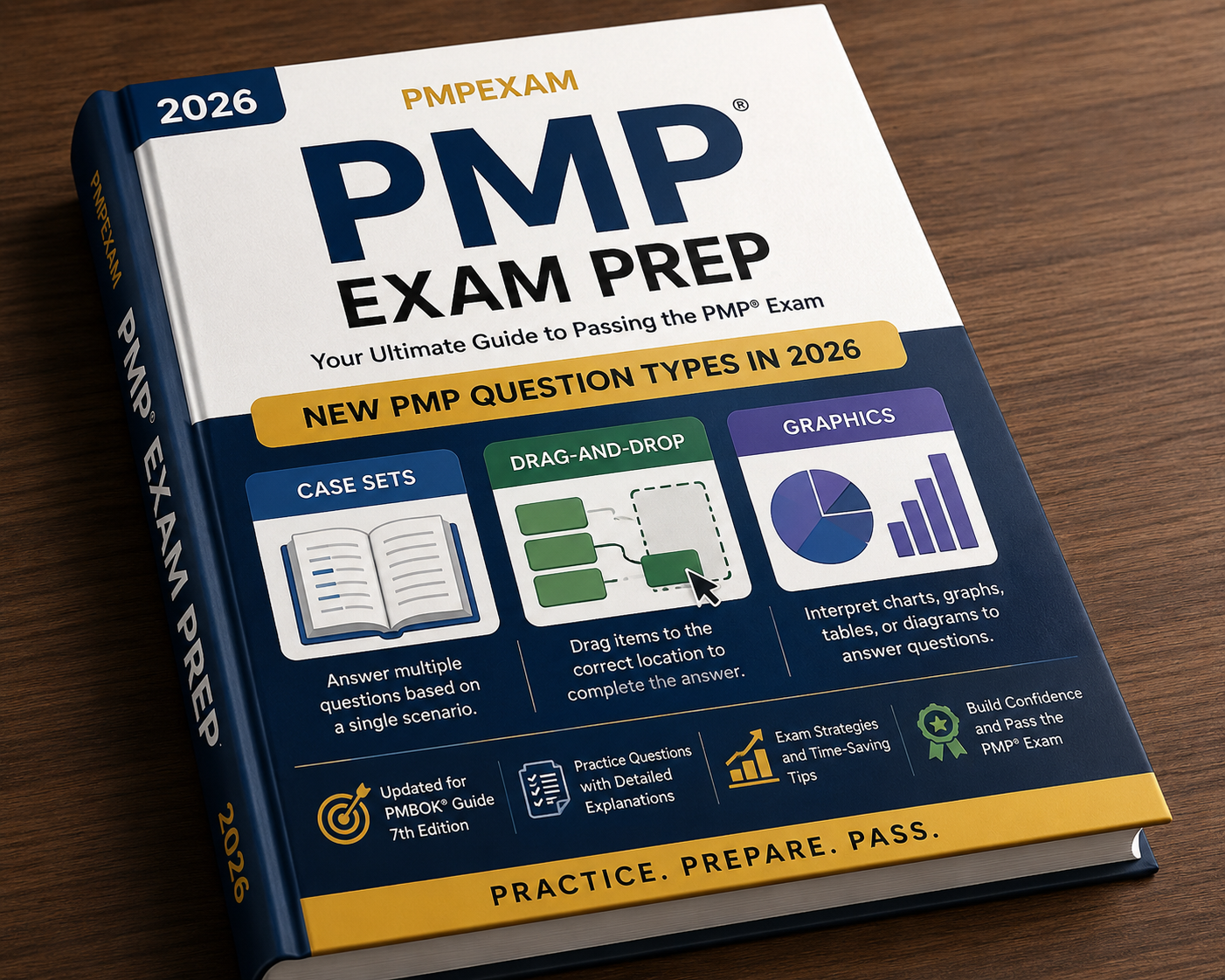
New PMP question types 2026 are the single biggest reason candidates are walking out of Pearson VUE centers more nervous than they expected. If you learned PMP prep through plain multiple-choice questions, the current exam will surprise you. PMI has shifted toward case study questions PMI, drag and drop simulation questions, and graphics based assessment items that test how you think, not just what you remember.
As a PMP coach in India, I work with professionals across IT, construction, banking, and healthcare every week, and almost every batch asks me the same thing: "Sir, what exactly do these new question formats look like, and how do I prepare for them?" This article answers that, in plain language, based on what I am seeing directly from students sitting the exam in 2026.
Why PMI Changed the PMP Exam Format in 2026
PMI's exam content outline has moved heavily toward the Business Environment and People domains, and a static multiple-choice format simply could not test judgment, prioritization, or stakeholder reasoning well enough. The PMP exam format 2026 reflects how real project managers actually work — juggling ambiguous information, conflicting priorities, and visual data, often under time pressure.
If you've been following the broader changes, you may already know how the domain weightings shifted dramatically this year. The new question types are PMI's way of testing those reweighted domains properly, instead of just adding more theory-based recall questions.
The Three New PMP Question Types You Need to Know
1. Case Set Questions (Scenario-Based Clusters)
Case study questions PMI are no longer one-off scenarios. In 2026, you'll often see a single detailed project scenario followed by three to five linked questions, all drawing on the same background information.
What this means practically:
You must read the full scenario carefully before answering any question in the set
Earlier answers don't directly affect later ones, but missing a key detail in the scenario can cost you on multiple questions at once
These case sets test scenario based questions PMI style reasoning — stakeholder conflict, risk response selection, change control decisions — all within one storyline
This format rewards candidates who practice with realistic, layered scenarios rather than isolated flashcard-style questions. It's one of the reasons I rebuilt parts of my own coaching material around the PMBOK 7 to PMBOK 8 transition, since case sets lean heavily on the newer framework's emphasis on outcomes over rigid process steps.
2. Drag-and-Drop Simulation Questions
Drag and drop simulation questions ask you to physically sequence, match, or sort items on screen — for example, arranging risk response steps in the correct order, matching project documents to their correct phase, or sequencing a change request workflow.
Why these trip people up:
There is no partial credit guessing; sequencing requires genuine process knowledge
Time pressure is higher because dragging and rearranging takes longer than clicking a radio button
Many candidates know the individual concepts but have never practiced applying them in a strict order
This is exactly the kind of interactive exam questions PMP format where rote memorization fails and applied understanding wins.
3. Graphics-Based Assessment Questions
Graphics based assessment questions use diagrams, charts, network diagrams, organizational charts, or process flows as the core of the question itself — not just decoration. You might be asked to interpret a network diagram to find the critical path, read a stakeholder power-interest grid, or identify an error in a workflow chart.
These questions reward visual learning questions PMP preparation specifically:
Practice reading PMBOK-style diagrams quickly, not just memorizing their definitions
Get comfortable estimating from visuals under time pressure
Train yourself to spot what's missing or wrong in a chart, not just what's present
How This Fits Into PMI's Adaptive Testing Format
PMI hasn't just added new formats — it has restructured how questions flow together. The adaptive testing format PMI uses in 2026 means your exam experience blends traditional multiple-choice with these newer formats throughout each domain, rather than grouping them separately. You won't know in advance which format is coming next, which is why broad-based practice matters more than format-specific cramming.
This adaptive structure ties directly into the PMBOK knowledge areas interactive testing PMI is pushing toward — assessing People, Process, and Business Environment domains through formats that mirror real project decision-making, not textbook recall.
If you haven't reviewed how the task breakdown actually maps to these domains, it's worth going through the full task-by-task PMP exam content outline for 2026 before you start practicing the new formats — it tells you exactly where case sets and graphics questions are most likely to appear.
How to Prepare for the New PMP Question Types
Practice With Format-Matched Mock Tests
Generic question banks built for the old format won't expose you to case sets or drag-and-drop logic. Seek out 2026-updated mock exams that replicate PMI's actual interface.
Slow Down on Case Sets, Speed Up on Recall Questions
Budget extra time per case set cluster since you're reading once and answering multiple questions. Make up that time on straightforward recall-based items so your overall pacing stays on track.
Build Visual Literacy Early
Spend deliberate time each week reading network diagrams, RACI charts, and process flows instead of only reading text-based PMBOK summaries. This single habit makes graphics based assessment questions far less intimidating.
Don't Skip the Fundamentals
These new formats test the same underlying knowledge areas — they just test them differently. A shaky grasp of core PMBOK knowledge areas interactive concepts will hurt you regardless of question format.
A Coach's Perspective on the 2026 Format Shift
I've trained over 10,000 professionals for project management certification 2026 cycles, and the candidates struggling most with these new formats aren't the ones who know less — they're the ones who only practiced one style of question. The PMP exam was always testing judgment. PMI has simply made that intent harder to hide from.
In my own coaching sessions, I've had to rework how I walk students through scenario analysis, specifically because the syllabus shift this year actually favors working professionals who already think in real-world scenarios rather than textbook sequences. If you've spent years managing actual projects, these new formats often play to your strengths once you know what to expect.
FAQs: New PMP Question Types 2026
Are case set questions harder than regular PMP questions?
Not inherently harder, but they demand more careful reading. Since three to five questions share one scenario, missing a detail early can affect multiple answers. Slow, careful reading matters more here than anywhere else on the exam.
How many drag-and-drop questions appear on the 2026 PMP exam?
PMI does not publish an exact fixed count, and it can vary by exam version under the adaptive testing format PMI uses. Expect a meaningful portion of your exam to include sequencing or matching-style items, so practice is essential regardless of exact numbers.
Do I need special software to practice graphics-based questions?
No special software is required, but you should practice with PMI-aligned mock exams that visually replicate network diagrams, charts, and process flows the way the real exam presents them, rather than relying on static textbook images alone.
Is the new PMP exam format harder overall than before?
It tests differently rather than purely "harder." Candidates with strong applied project experience often find scenario-based and visual formats more intuitive than memorization-heavy old-style questions, while those who only memorized definitions tend to find it more challenging.
Where can I find updated practice questions for the 2026 PMP format?
Look for prep providers who have explicitly rebuilt their question banks around the 2026 exam content outline and case-set, drag-and-drop, and graphics formats — not legacy banks simply relabeled for the current year.
If you want hands-on practice with these exact formats — case sets, drag-and-drop sequencing, and graphics-based reasoning — built around real PMI 2026 exam logic, you can explore PMP coaching in India with Visakh RJ, where these new question types are worked into every mock test and live session.