
Sustainability and ESG in PMP Exam 2026: Everything You Need to Know to Pass
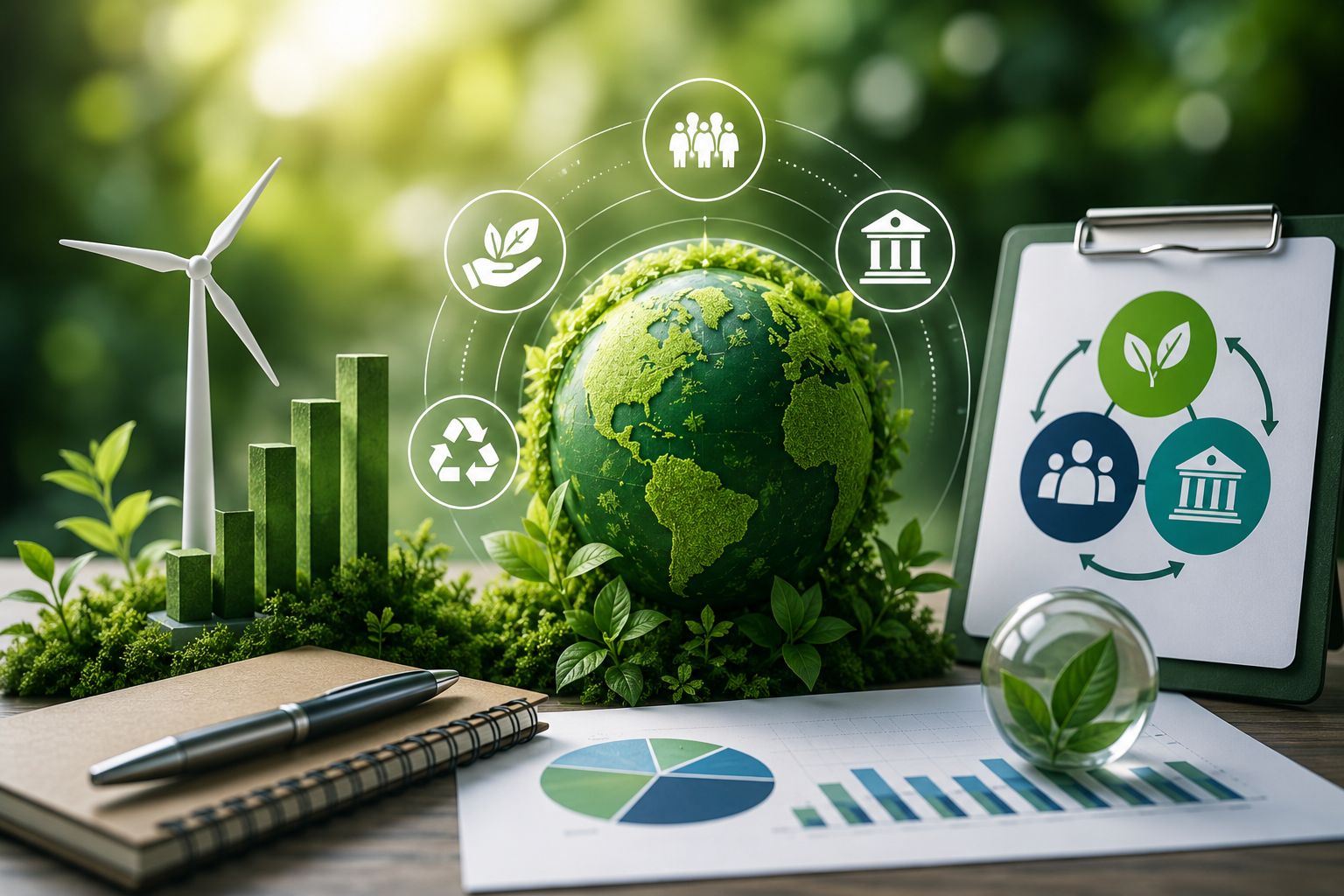
Sustainability and ESG in PMP Exam 2026 has moved from background context to a frontline examination priority. PMI has made this shift deliberately and permanently. If you are preparing for your PMP certification this year — whether you are based in Dubai, Mumbai, London, Toronto, or Nairobi — understanding how sustainability and ESG principles are tested is no longer optional. It is the difference between passing and falling short.
This guide gives you everything you need — clearly structured, practically focused, and built for both domestic and international candidates.
Why PMI Made Sustainability and ESG a Core PMP Priority
Project management does not happen in isolation from the world around it. Organizations globally are being held accountable for their environmental impact, their social practices, and the quality of their governance — and their projects are where those commitments are either honored or broken.
PMI recognized this shift and embedded it directly into the PMP examination framework. PMP 2026 sustainability questions are not theoretical exercises. They reflect real decisions that project managers face daily — balancing delivery timelines against environmental obligations, managing stakeholders with competing social interests, and maintaining governance integrity under commercial pressure.
For international candidates, this alignment is especially relevant. The UAE Net Zero 2050 strategy, the EU sustainability reporting mandates, India's national climate action commitments, and the UN Sustainable Development Goals are all shaping how organizations define project success. The PMP exam reflects that global reality directly and without apology.
Understanding ESG in Plain Language
Before exploring how ESG concepts for PMP certification appear in exam questions, it helps to be absolutely clear on what each pillar actually means in a project context.
Environmental covers your project's relationship with the natural world. Carbon emissions, resource consumption, waste generation, biodiversity risk, water usage, and climate change exposure all fall here. A project manager who ignores environmental impact in 2026 is not just ethically behind — they are professionally exposed.
Social addresses the human dimension of every project. Worker safety, labor standards, community impact, supply chain ethics, diversity and inclusion, and stakeholder wellbeing are all social sustainability concerns. PMP exam climate risk questions increasingly connect environmental exposure to the social communities most affected by those risks.
Governance defines how projects are authorized, monitored, and held accountable. Ethical decision-making, transparency in reporting, anti-corruption practices, and alignment with organizational policy frameworks are all ESG compliance project manager competencies that the 2026 exam actively measures.
How Sustainability and ESG Appear Across All Three PMP Domains
Sustainability and ESG in PMP Exam 2026 is distributed across every examination domain. Candidates who treat it as a single topic rather than a cross-cutting competency consistently underperform on this content.
Domain 1: People
The People domain tests leadership, team management, and stakeholder engagement. Sustainability content here focuses on ethical conduct, inclusive leadership, team wellbeing, and social responsibility in stakeholder relationships.
Expect PMP 2026 sustainability questions that present community opposition to environmentally sensitive projects, or scenarios where delivery efficiency targets conflict directly with fair labor practices. The correct response consistently prioritizes long-term stakeholder trust over short-term performance metrics.
Domain 2: Process
This is where green project management PMP principles appear most technically and most frequently. Sustainability is integrated into scope definition, risk identification, procurement decisions, and performance measurement.
PMP sustainability knowledge areas within this domain include applying environmental criteria to vendor selection, incorporating lifecycle thinking into project planning, and measuring sustainability performance alongside traditional schedule and cost indicators.
ESG integration in project management at the process level also means knowing when to apply sustainability review gates during phase transitions and how to document environmental and social impacts within standard project reporting structures. These are tested as scenario decisions, not as definitions.
Domain 3: Business Environment
This domain carries the heaviest sustainability weighting across the entire exam. It connects project decisions to organizational strategy, regulatory compliance, and long-term value creation for all stakeholders.
PMI environmental standards 2026 content within this domain covers organizational sustainability policies, ESG reporting frameworks, regulatory compliance requirements, and how project managers contribute actively to their organization's broader sustainability commitments rather than simply avoiding violations.
ESG concepts for PMP certification in the Business Environment domain also test how project managers communicate sustainability performance upward to executive sponsors and outward to external stakeholders — a competency that is now demanded by both private sector organizations and government clients across every major market.
ESG Frameworks You Must Know Before Exam Day
You do not need to become a sustainability consultant to pass your PMP. You do need working familiarity with the frameworks that appear repeatedly in exam scenarios.
UN Sustainable Development Goals — The 17 SDGs provide the globally recognized framework that most organizations use to align project portfolios with broader development commitments. Understanding how individual projects contribute to or conflict with SDG targets is genuine PMP exam ESG framework 2026 content.
The Triple Bottom Line — People, Planet, and Profit. This framework expands project success measurement beyond financial performance to include social and environmental outcomes. Sustainable project management certification candidates must apply triple bottom line thinking confidently to project evaluation scenarios.
Lifecycle Assessment Thinking — A project's environmental impact extends beyond delivery into operational use and eventual decommissioning. Understanding and applying lifecycle thinking is tested sustainable development PMP guide content that appears in multiple scenario formats.
GRI and SASB Reporting Standards — The Global Reporting Initiative and Sustainability Accounting Standards Board frameworks define how organizations measure and communicate sustainability performance. Familiarity with these standards provides the organizational context that informs several PMP 2026 sustainability questions in the Business Environment domain.
How to Study Sustainability Topics Effectively
Most PMP candidates underinvest in sustainability preparation. That gap is your advantage if you approach it strategically.
Study real ESG project cases — Review publicly available sustainability reports from major infrastructure, technology, and construction projects. Real-world context builds the intuitive understanding that scenario questions demand and that memorized definitions alone cannot provide.
Practice stakeholder conflict scenarios — A significant proportion of PMP 2026 sustainability questions present conflicts between project delivery efficiency, community impact, and environmental protection. Practice identifying responses that balance all three rather than optimizing exclusively for speed or cost.
Build your sustainability vocabulary — Terms including carbon footprint, scope emissions, environmental impact assessment, social license to operate, materiality assessment, and governance accountability appear in exam scenarios. Knowing these terms in context prevents costly misreads under time pressure.
Connect sustainability to risk management — Climate risk, regulatory change risk, reputational risk from poor social practices, and governance failure are all legitimate PMP exam climate risk questions topics. Practice integrating these into standard risk register identification, analysis, and response planning scenarios.
Apply ESG thinking across both agile and predictive frameworks — Green project management PMP content appears in sprint retrospectives, agile portfolio reviews, and hybrid delivery scenarios as well as traditional phase-gated project structures. The exam tests sustainability competency across all delivery approaches.
What a Sustainability-Competent Response Looks Like
The PMP exam rewards a specific pattern of thinking when sustainability is in play. Recognizing this pattern is one of the most practical ESG concepts for PMP certification study strategies available.
A sustainability-competent response prioritizes long-term stakeholder value over short-term delivery pressure when environmental or social risks are present. It escalates ESG compliance concerns through appropriate governance channels rather than absorbing them quietly within the project team. It incorporates sustainability metrics into performance reporting alongside schedule, cost, and scope data. It treats affected communities as legitimate stakeholders deserving proactive engagement rather than as opposition to be managed away. It recommends sustainable procurement alternatives where lifecycle value and organizational policy support the decision even when upfront costs are higher.
Every one of these response patterns reflects ESG compliance project manager competency that the 2026 exam actively rewards across all three domains.
Sustainability Is a Global Professional Standard — Not a Regional Trend
Some international candidates assume that sustainability and ESG in PMP Exam 2026 content reflects a primarily Western or European regulatory context. This assumption is incorrect and costly.
PMI's examination content is calibrated against global project management practice. The UAE Vision 2031 sustainability commitments, Saudi Arabia's Vision 2030 environmental targets, Singapore's Green Plan, India's national climate action programs, and Kenya's renewable energy infrastructure push all reflect the same organizational transformation that the PMP exam now tests. Sustainable project management certification is a universal professional standard in 2026 — not a regional preference.
Turn Sustainability Knowledge Into Exam Performance
Sustainability and ESG in PMP Exam 2026 represents one of the clearest opportunities available to well-prepared candidates. Most people underinvest here. Thorough preparation in this area directly improves your performance relative to the broader candidate pool.
Study the frameworks with intention. Practice the scenarios with discipline. Build the vocabulary with precision. Connect every sustainability concept back to real project decisions made by real project managers facing real organizational pressure.
That is how sustainability principles PMP certification competency is demonstrated — not by reciting definitions, but by making the right call when the scenario puts you under pressure.
You have chosen to prepare properly. That decision already puts you ahead.