
PMP to PgMP Certification Roadmap: Build a 5-Year PMI Plan
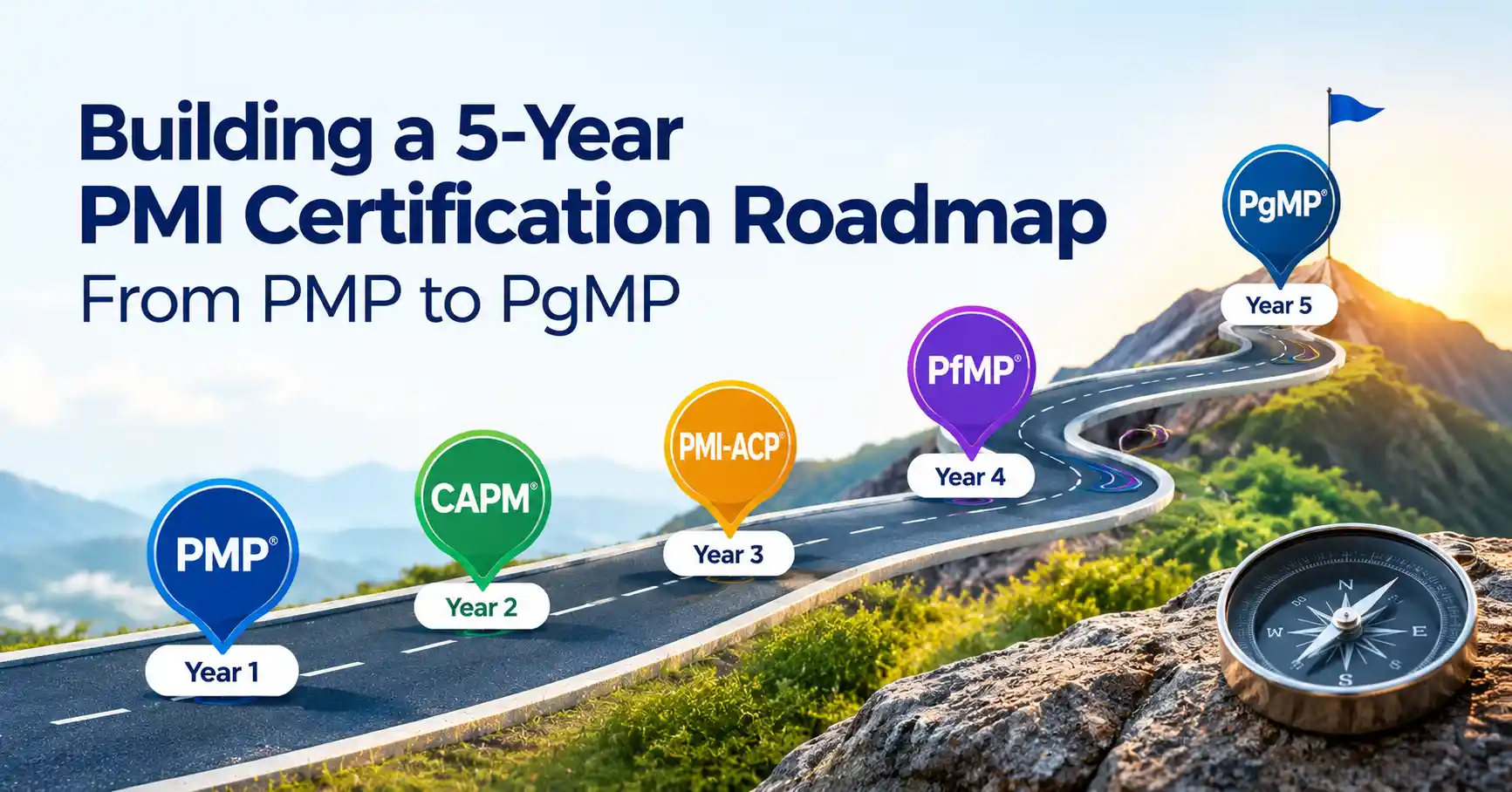
A PMP to PgMP Certification Roadmap turns a vague wish to "grow in my career" into a clear, dated plan. If you hold the PMP and want to lead programs, you need more than another exam. You need a sequence of experience, credentials and proof.
Many PMs stall after the PMP because the next step is unclear. This guide lays out a realistic five-year path, explains what PMI expects and shows how to avoid common traps. Start at the Visakh RJ home page if you are still building your PMP foundation.
Why You Need a PMP to PgMP Certification Roadmap
The PMP is a strong base, but it does not automatically lead to senior program roles. The PgMP is different because it rewards years of real program-level responsibility.
A written 5-Year Project Management Career Plan gives you three advantages:
Direction: you know which credential or role comes next.
Evidence: you collect program-level experience on purpose, not by luck.
Timing: you avoid applying too early and wasting effort.
In short, a PMI Certification Roadmap protects your time and money. It also helps you explain your goals to managers and mentors.
The Project Management Certification Path at a Glance
The Project Management Certification Path from PMP to PgMP usually looks like this:
PMP: proves you can deliver projects.
A specialist credential: such as PMI-RMP, PMI-SP or a Disciplined Agile credential, depending on your role.
Program experience: leading coordinated projects toward shared benefits.
PgMP: proves advanced program management expertise.
This is the core PMP to PgMP Certification Path. Each step builds on the last, and the experience between credentials matters as much as the credentials themselves.
Understanding the PgMP: Program Management Professional Certification
The Program Management Professional Certification is issued by PMI. It shows advanced expertise in managing multiple projects in a coordinated way.
It is an experience-based credential. Therefore, PMI asks you to prove your work before you ever sit the exam.
PgMP Certification Requirements
The PgMP Certification Requirements are set by PMI, and you must meet one of three eligibility sets (Set A, B or C). The process has clear stages:
Meet one eligibility set. Check the current sets on PMI's website.
Submit your application. Summarise your program management experience.
Pass the panel review. After you pay, a panel of volunteer PgMP-certified program managers assesses your experience.
Schedule and pass the exam. You can only book once the panel review is successful.
Maintain the credential. PgMP holders earn 60 PDUs in each three-year cycle.
Because experience thresholds depend on your set, always confirm the exact numbers on pmi.org before planning your dates.
PMP vs PgMP Certification: Key Differences
PMP vs PgMP Certification is a comparison of scope, not difficulty.
PMP (Project Management Professional)
Focus: delivering individual projects
Audience: project managers at many levels
Strength: execution, people and process
Best for: leading projects
PgMP (Program Management Professional)
Focus: managing groups of related projects for shared benefits
Audience: senior and program managers
Strength: coordination, governance and benefit delivery
Best for: leading programs
The PMP shows you can deliver a project well. The PgMP shows you can coordinate many of them toward one strategic outcome.
Year-by-Year PMP to PgMP Certification Roadmap
Here is a practical five-year plan. Adjust the timing to your own experience, because PgMP depends on real responsibility.
Year 1: Strengthen Your PMP Foundation
Lead larger or more complex projects.
Learn stakeholder, benefits and business-case basics.
Track your results with numbers, not just titles.
This is the base of PMP Certification Career Growth. If you need a refresher, read our guide on what PMP certification is and how it works.
Year 2: Add a Specialist Credential
Choose Advanced PMI Certifications that match your role:
Scheduling-heavy role: consider PMI-SP.
Risk-heavy role: consider PMI-RMP.
Agile or hybrid role: consider a Disciplined Agile credential.
Our comparison of PMI-RMP vs PMP shows how a second credential adds depth.
Year 3: Move Into Program-Level Work
Ask to coordinate several related projects.
Join your PMO or benefits-tracking meetings.
Report on shared outcomes, not single-project metrics.
This step defines the Project Manager to Program Manager Career Path. It is where most of your PgMP evidence will come from.
Year 4: Build and Document Your Evidence
Keep a record of program decisions, risks and results.
Collect references who saw your work.
Compare your history against the PgMP eligibility sets.
Year 5: Apply, Pass the Panel and Sit the Exam
Submit a clear, honest application.
Prepare examples for the panel review.
Study the exam content outline and practise scenario questions.
Not everyone will be ready in exactly five years. That is fine, because the roadmap is a guide, not a deadline.
Why This Roadmap Works in Doha and Qatar
Qatar runs large, connected programmes in energy, infrastructure, sport, real estate and public services. These programmes need leaders who can coordinate many projects at once.
For Gulf-based professionals, a clear PMP to PgMP Certification Roadmap can open PMO and programme leadership roles. It also shows employers you are planning for senior responsibility, not just the next project.
Common Mistakes to Avoid
Applying too early: the panel review tests real program experience.
Skipping documentation: vague examples weaken your application.
Collecting credentials without a goal: each one should support the PMP to PgMP Certification Roadmap.
Ignoring business skills: programs live and die on benefits and strategy.
Waiting for a title: you can gain program-level experience before you hold the "program manager" title.
Frequently Asked Questions
What is the PMP to PgMP Certification Roadmap?
It is a staged plan that takes you from the PMP, through specialist credentials and program-level experience, to the PgMP.
How long does it take to go from PMP to PgMP?
It depends on your experience. A five-year plan is realistic for many professionals, but you must meet PMI's eligibility set first.
Do I need the PMP before the PgMP?
PMI sets separate eligibility sets, so check which one fits you. Many candidates hold the PMP, but always confirm on pmi.org.
Is the PgMP harder than the PMP?
It is different. It needs more experience and a panel review, and it tests program-level judgment.
Is the PgMP worth it in Qatar?
It can be for senior PMs working on large programmes, where coordination and benefits delivery are priorities.
Final Thoughts
Credentials alone will not move your career. Experience, evidence and timing will. Use a PMP to PgMP Certification Roadmap to line all three up, review it every year and adjust as your role changes.
About the Author
Visakh RJ is a PMP coach with 15+ years of industry experience and 10,000+ professionals mentored. He was named "The PMP Production Machine" by PMP co-founder Lee R. Lambert.
Ready to Plan Your Next Credential?
Get personal guidance on your PMP to PgMP Certification Roadmap and your career path.
🔥 Chat With Visakh RJ on WhatsApp
Address: Visakh RJ, Mumbai, India