
The Art of the Difficult Status Update: Delivering Bad News Early
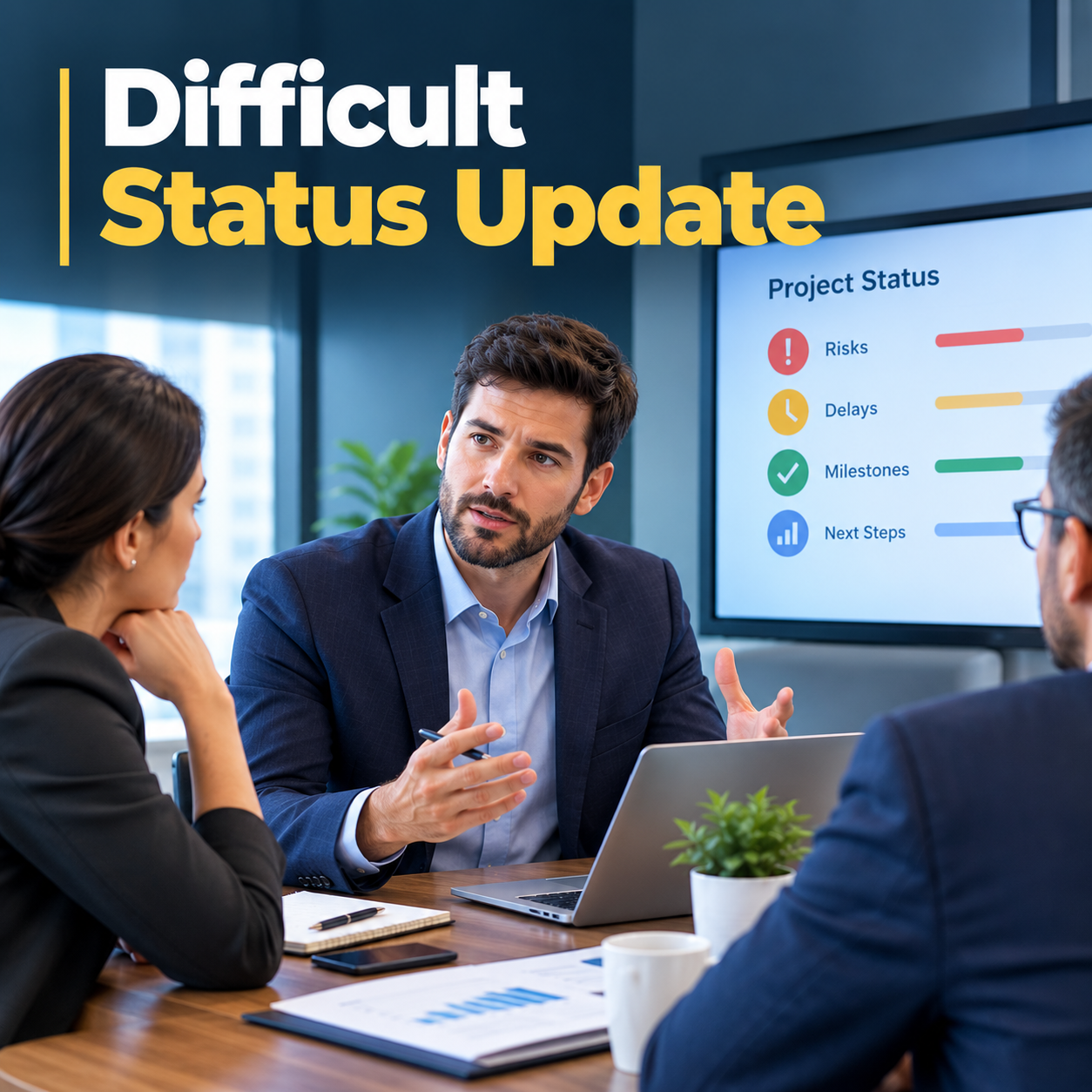
A difficult status update is one of the clearest tests of a project manager's leadership, revealing whether you default to optimistic spin, uncomfortable silence, or genuine, confident transparency when a project isn't going according to plan. How you handle this single moment often shapes stakeholder trust far more than months of routine, uneventful reporting ever could.
This guide covers how to deliver a difficult status update with confidence, timing bad news correctly and framing it in a way that actually strengthens trust rather than eroding it.
Why Delivering Bad News Early Matters More Than Getting It Right
Delivering Bad News Early consistently matters more than crafting the perfect message. Stakeholders forgive delays, budget overruns, and setbacks far more readily than they forgive discovering that a project manager knew about a problem for weeks before finally admitting it.
This pattern holds across nearly every project context: the damage from a delayed status update almost always exceeds the damage from the original problem itself, since late disclosure signals either poor judgment or, worse, deliberate concealment — both of which erode trust more severely than the underlying issue ever would on its own.
The Psychology Behind Why Project Managers Delay Bad News
Understanding Difficult Status Update in Project Management challenges starts with recognizing why delay happens so consistently, even among experienced professionals who intellectually know better.
Hoping the Problem Resolves Itself
A common instinct involves waiting to see if a problem corrects itself before escalating, reasoning that raising an alarm prematurely wastes stakeholder attention on something that might not even materialize. This instinct, while understandable, frequently backfires when the problem doesn't resolve and stakeholders discover it's been building for longer than initially disclosed.
Fear of Appearing Incompetent
Many project managers delay difficult updates out of concern that bad news reflects poorly on their own leadership or planning. In reality, stakeholders generally respect proactive, early disclosure far more than they respect projects that appear flawless right up until a sudden, unexplained crisis emerges.
Project Risk Communication: Timing the Update Correctly
Effective Project Risk Communication requires finding the right balance between premature alarm and delayed disclosure, a judgment call that improves significantly with deliberate practice and clear internal guidelines.
When a Risk Becomes Worth Escalating
A useful internal threshold: if a risk has moved from theoretical possibility to genuine, measurable likelihood — even if it hasn't yet fully materialized — it typically warrants proactive communication rather than waiting for certainty. Stakeholders generally prefer early warning about a 60% likely problem over being blindsided by a 100% certain one discovered too late to address proactively.
Avoiding Constant False Alarms
Communicating every minor fluctuation as a crisis eventually desensitizes stakeholders, making them less responsive when a genuinely significant issue arises. Reserving difficult status updates for issues that truly warrant executive attention preserves the credibility and urgency of future communications.
Project Status Update Best Practices for Delivering Bad News
A few consistent Project Status Update Best Practices significantly improve how difficult news gets received, regardless of the specific situation being communicated.
Lead with the headline, stating the core issue clearly in the first sentence rather than building up to it through lengthy context
Pair every problem with a response, never presenting bad news without an accompanying action plan, even if that plan is still being developed
Quantify the impact specifically, replacing vague language like "this might cause delays" with concrete figures like "this will likely push delivery by two weeks"
Own the situation directly, avoiding passive language that obscures accountability or responsibility
Invite dialogue, closing with a clear opportunity for stakeholders to ask questions or discuss the situation further
Communicating Project Delays: A Practical Framework
Communicating Project Delays specifically requires a structured approach that balances honesty with constructive forward momentum.
The Four-Part Delay Communication Structure
A reliable structure for delay communication includes: stating the delay and its specific duration, explaining the root cause briefly without excessive detail, outlining the recovery plan or mitigation steps already underway, and proposing a specific next touchpoint for follow-up discussion.
A Practical Example
Consider a software project facing a three-week delay due to an unresolved third-party integration issue. A weak update buries this news: "The team has been working hard and we're making good progress on several fronts, though the integration has presented some challenges that we're continuing to investigate."
A strong update states directly: "I need to flag a three-week delay to our go-live date, caused by an unresolved integration issue with our payment vendor. We've identified two possible fixes and expect to confirm the path forward by Thursday. I'd like fifteen minutes this week to walk through the revised timeline."
Bad News in Project Management: Building the Right Organizational Culture
Bad News in Project Management gets communicated more honestly and promptly when organizational culture genuinely rewards early disclosure rather than punishing it. Project managers who've previously been criticized harshly for raising problems early often learn, understandably, to delay future disclosures — a pattern that ultimately damages organizations far more than the discomfort of hearing difficult news promptly.
Leaders responsible for receiving these updates play a significant role in shaping this culture, since how they respond to early disclosure directly influences whether project managers continue communicating proactively or retreat into defensive, delayed reporting patterns.
Stakeholder Communication Skills: Adjusting Tone by Audience
Strong Stakeholder Communication Skills require adjusting how difficult news gets framed depending on the specific audience receiving it. A technical team member needs different detail than an executive sponsor, who typically wants business impact and recovery plan far more than root cause technical explanation.
This audience-specific framing connects directly to the broader discipline covered in writing executive summaries that actually get read, since difficult status updates ultimately require the same clarity and brevity that effective executive communication demands more generally.
Transparent Project Reporting: Building Long-Term Stakeholder Trust
Transparent Project Reporting, practiced consistently over time, builds a reservoir of trust that makes any single difficult update easier to deliver and receive. Stakeholders who've experienced consistent, honest reporting throughout a project's history generally respond to bad news with far less alarm than stakeholders accustomed to only hearing positive updates right up until a sudden crisis.
This consistency matters more than any individual difficult conversation, since trust built incrementally through routine transparency becomes the foundation that makes genuinely difficult moments survivable without permanently damaging stakeholder confidence.
Handling Difficult Project Updates: The Role of Composure
Handling Difficult Project Updates effectively requires genuine composure under pressure, since stakeholders read a project manager's confidence and tone as much as the actual content being communicated. A nervous, apologetic delivery often undermines an otherwise well-structured update, while calm, direct communication — even delivering genuinely bad news — reassures stakeholders that the situation remains under capable management.
This kind of composed delivery draws directly on the psychological presence and professional authority that separates project managers who maintain stakeholder confidence through difficult moments from those whose anxiety during delivery amplifies stakeholder concern beyond what the actual situation warrants.
Project Manager Communication Skills: Building This Capability Deliberately
Developing genuine Project Manager Communication Skills around difficult status updates improves significantly through deliberate practice, honest feedback, and studying how experienced leaders handle comparable situations, rather than through unguided trial and error alone.
This is exactly the kind of practical, scenario-based coaching I work through with mentees, helping project managers build the confidence and structure needed to deliver difficult news early and effectively. If you're navigating a specific difficult update, what a PMP coach actually helps with extends well beyond exam preparation into exactly this kind of high-stakes communication skill.
Making Early, Honest Communication a Default Practice
Mastering the difficult status update ultimately comes down to timing, structure, and composed delivery rather than avoiding or softening genuinely necessary bad news. If you want to build this capability deliberately, it's exactly the kind of practical coaching I offer at rjvisakh.com.
FAQs
How early should bad news be communicated to stakeholders?
As soon as a risk moves from theoretical possibility to genuine likelihood, even before full certainty, generally produces better outcomes than waiting for complete confirmation.
What's the biggest mistake project managers make when delivering bad news?
Delaying disclosure while hoping the problem resolves on its own, which almost always damages trust more than the original issue once discovered later.
Should bad news always be delivered in writing or verbally first?
Serious issues often warrant a verbal conversation first, with written communication following to confirm details, rather than delivering significant bad news cold through email alone.
How do I stay composed when delivering genuinely difficult news?
Preparation helps significantly — knowing your key points, the recovery plan, and anticipated questions in advance reduces the anxiety that often undermines composed delivery.
Can consistent transparency really make future bad news easier to deliver?
Yes. Stakeholders who've experienced consistent, honest reporting over time generally respond to individual difficult updates with far less alarm and greater trust.
Ready to deliver difficult updates with genuine confidence? Talk to Visakh RJ →
Visakh RJ | PMP Coach · Speaker · Mindset Alchemist
📍 Mumbai, India | 📞 +91 62825 40905