
Recovering Stakeholder Trust After a Failed Product Launch
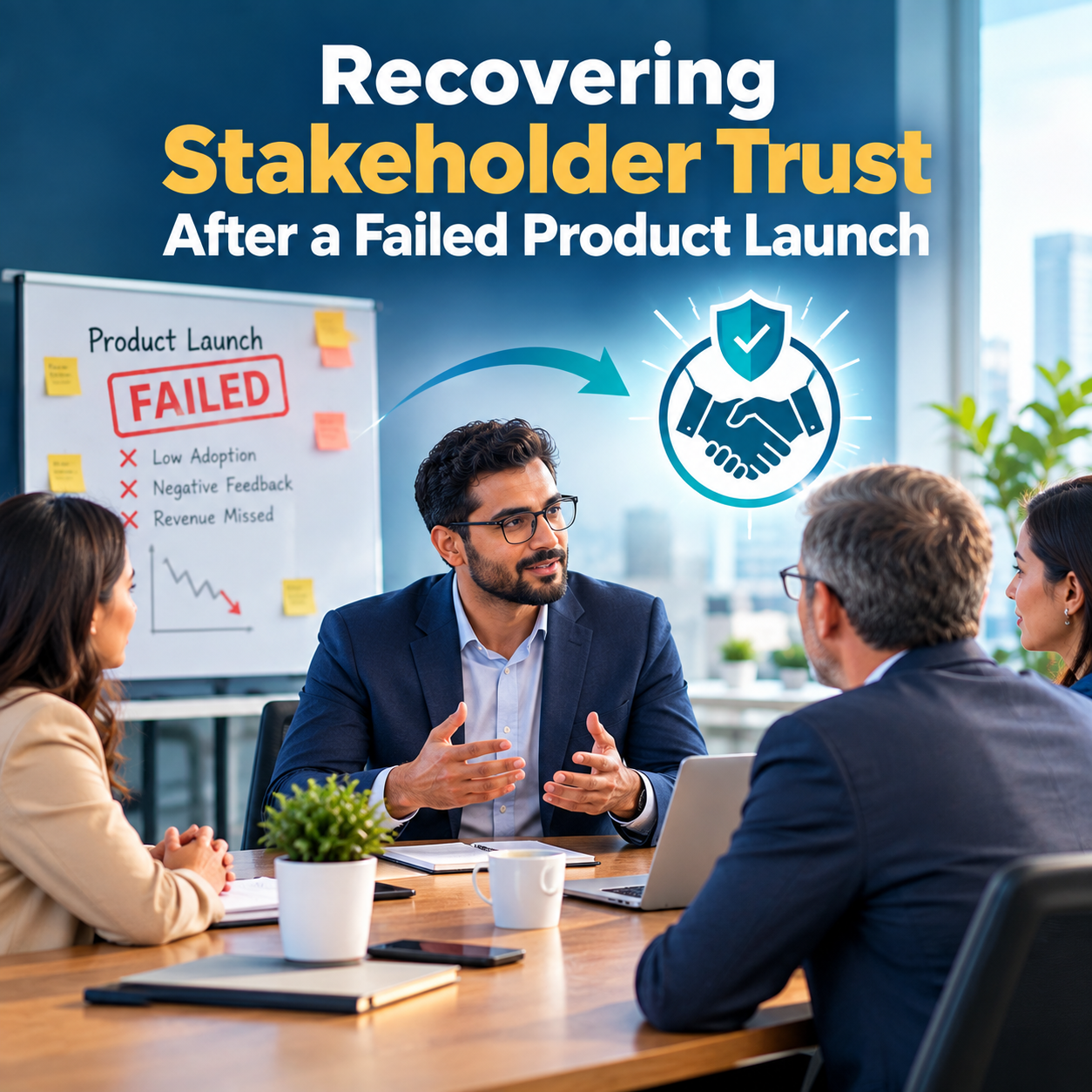
Stakeholder trust recovery is one of the hardest challenges a project or product manager faces, and one PMP training rarely addresses in depth. A failed launch doesn't just cost revenue and timeline — it damages the confidence stakeholders have in your ability to deliver, and that damage doesn't repair itself simply because the next release goes better.
This guide walks through a practical, structured approach to stakeholder trust recovery after a failed product launch, covering what actually rebuilds confidence versus what quietly makes stakeholders more skeptical.
Why Stakeholder Trust Recovery Requires More Than a Better Next Launch
Many teams assume that trust naturally returns once the next release succeeds. In practice, stakeholder trust recovery requires deliberate, visible effort during the recovery period itself — not just eventual results. Stakeholders who've been burned once watch closely for signs that the same mistakes might repeat, and silence during that watching period reads as avoidance, not confidence.
Effective stakeholder management after a failure means engaging more actively, not less, even when every instinct says to keep a low profile until you have better news to share.
Understanding What a Failed Product Launch Actually Damages
A failed product launch damages three distinct things that each require separate recovery attention: confidence in the team's technical execution, confidence in the team's judgment and planning, and the personal relationship between stakeholders and the people delivering the project. Addressing only the technical fix while ignoring the relationship and judgment components leaves recovery incomplete.
This distinction matters because product launch risk management conversations often focus entirely on technical root cause, while stakeholders are simultaneously asking a different question: can I trust this team's judgment going forward?
Step One: Immediate, Transparent Stakeholder Communication
The first 48 to 72 hours after a failed launch set the tone for the entire recovery. Stakeholder communication after project failure should follow a few clear principles:
Communicate before being asked, rather than waiting for stakeholders to demand an explanation
Acknowledge the failure directly, without minimizing it or burying it in technical jargon
Share what's known and what's still being investigated, rather than presenting incomplete conclusions as final answers
Provide a clear timeline for the next update, so stakeholders aren't left wondering when they'll hear more
This early transparency doesn't undo the failure, but it prevents the secondary damage that comes from stakeholders feeling kept in the dark during the most anxious period.
Step Two: Root Cause Analysis Shared Openly
Before proposing solutions, conduct a genuine root cause analysis — and share the findings with affected stakeholders, including uncomfortable details about what went wrong internally. This is a critical step in any credible project recovery strategies approach, because stakeholders can generally tell the difference between a thorough analysis and a rushed, face-saving explanation.
Sharing root cause findings openly, including internal process gaps, demonstrates the kind of accountability that begins rebuilding credibility even before the actual fix is implemented.
Step Three: Rebuilding Stakeholder Confidence Through Visible Action
Rebuilding stakeholder confidence requires visible, demonstrable changes, not just verbal reassurance that "this won't happen again." Concrete actions carry far more weight than promises:
Implement specific process changes directly tied to the root cause findings, and communicate exactly what changed
Introduce additional checkpoints or reviews before the next major milestone, giving stakeholders visibility into progress
Invite stakeholder participation in key decision points during the recovery phase, rather than presenting only finished plans
Deliver smaller, verifiable wins early, rebuilding confidence incrementally rather than asking stakeholders to simply trust the next big launch
This structured, visible approach to product launch recovery shows stakeholders the team's judgment has genuinely improved, not just that the immediate technical issue has been patched.
Step Four: A Structured Stakeholder Engagement Strategy for the Recovery Period
A deliberate stakeholder engagement strategy during recovery differs from normal project communication cadence. Increasing meeting frequency temporarily, even when there's less dramatic news to share, signals ongoing accountability rather than avoidance.
Segmenting Communication by Stakeholder Type
Not every stakeholder needs the same depth of technical detail. Executive sponsors typically want business impact and recovery timeline; technical stakeholders want root cause detail and process changes; end users or customers often need a simpler, outcome-focused message. Tailoring project stakeholder communication by audience prevents both overwhelming non-technical stakeholders and appearing evasive to technical ones.
Maintaining Consistency Across All Communications
Inconsistent messaging across different stakeholder groups — even unintentional variation in tone or detail — erodes trust further. A shared communication framework, reviewed before major updates go out, keeps the recovery narrative consistent regardless of audience.
Step Five: Demonstrating Long-Term Product Launch Risk Management Improvements
Once immediate recovery actions are underway, stakeholders increasingly look for evidence that product launch risk management has genuinely matured, not just that a single issue was patched. This might include a revised risk register with more rigorous pre-launch checkpoints, expanded testing protocols, or a formal go/no-go review process that didn't exist before the failure.
Presenting these structural improvements, ideally with stakeholder input incorporated, demonstrates that the failure produced lasting organizational learning rather than a one-time apology followed by business as usual.
A Real Example: Recovery in Practice
Consider a SaaS product team whose major feature launch failed due to inadequate load testing, causing a significant outage during a high-visibility rollout. Rather than quietly fixing the technical issue and moving on, the team held a transparent stakeholder session within 48 hours, sharing exact root cause findings including the testing gap.
Over the following six weeks, they introduced a formal load-testing checkpoint, invited a key stakeholder to review the revised go-live criteria before the next release, and delivered two smaller, successful releases before attempting the next major launch. This visible, incremental approach to stakeholder trust recovery rebuilt confidence steadily, culminating in a successful relaunch that stakeholders approached with far less anxiety than the recovery period's early days.
Why This Skill Matters Beyond a Single Failed Launch
Every project manager eventually faces a moment where something fails publicly and stakeholder confidence takes a hit. How that moment is handled often shapes a career trajectory more than the failure itself — teams that recover trust methodically tend to be trusted with larger, higher-stakes projects going forward, while those that mishandle recovery struggle to regain the same level of stakeholder confidence for years.
This kind of composed, structured leadership during a crisis draws heavily on the psychological presence and professional authority that separates leaders who navigate failure well from those who let it define them. It's also closely tied to the kind of stakeholder engagement techniques that build trust proactively, long before any crisis occurs.
Building This Capability Before You Need It
Most project managers only develop genuine skill at stakeholder trust recovery the hard way — by living through a failure without guidance. Structured coaching, working through realistic recovery scenarios before facing a real one, builds the judgment and composure needed to handle these moments effectively when they inevitably arise.
If you're navigating recovery from a difficult project outcome, or want to build this capability proactively, this is exactly the kind of practical, scenario-based coaching I offer at rjvisakh.com.
FAQs
How long does stakeholder trust recovery typically take after a failed launch?
It varies significantly by situation, but visible, consistent action over several weeks to a few months, backed by smaller successful wins, typically rebuilds meaningful confidence.
Should you over-communicate or under-communicate after a project failure?
Over-communicate. Increased transparency and update frequency during recovery, even without major news, signals ongoing accountability rather than avoidance.
What's the biggest mistake teams make when recovering stakeholder trust?
Focusing only on the technical fix while ignoring the relationship and judgment damage, or promising change verbally without visible, demonstrable action.
Should root cause findings be shared even if they reveal internal mistakes?
Yes. Transparent root cause sharing, including uncomfortable internal gaps, builds far more credibility than a vague or overly polished explanation.
Can stakeholder trust ever be fully restored after a serious failure?
Yes, in most cases, though it requires sustained, visible effort rather than a single successful follow-up release. Consistency over time is what ultimately rebuilds confidence.
Ready to rebuild stakeholder confidence with a clear strategy? Talk to Visakh RJ →
Visakh RJ | PMP Coach · Speaker · Mindset Alchemist
📍 Mumbai, India | 📞 +91 62825 40905