
PMP Exam Day Checklist: Everything You Must Carry to the Pearson VUE Testing Center in 2026
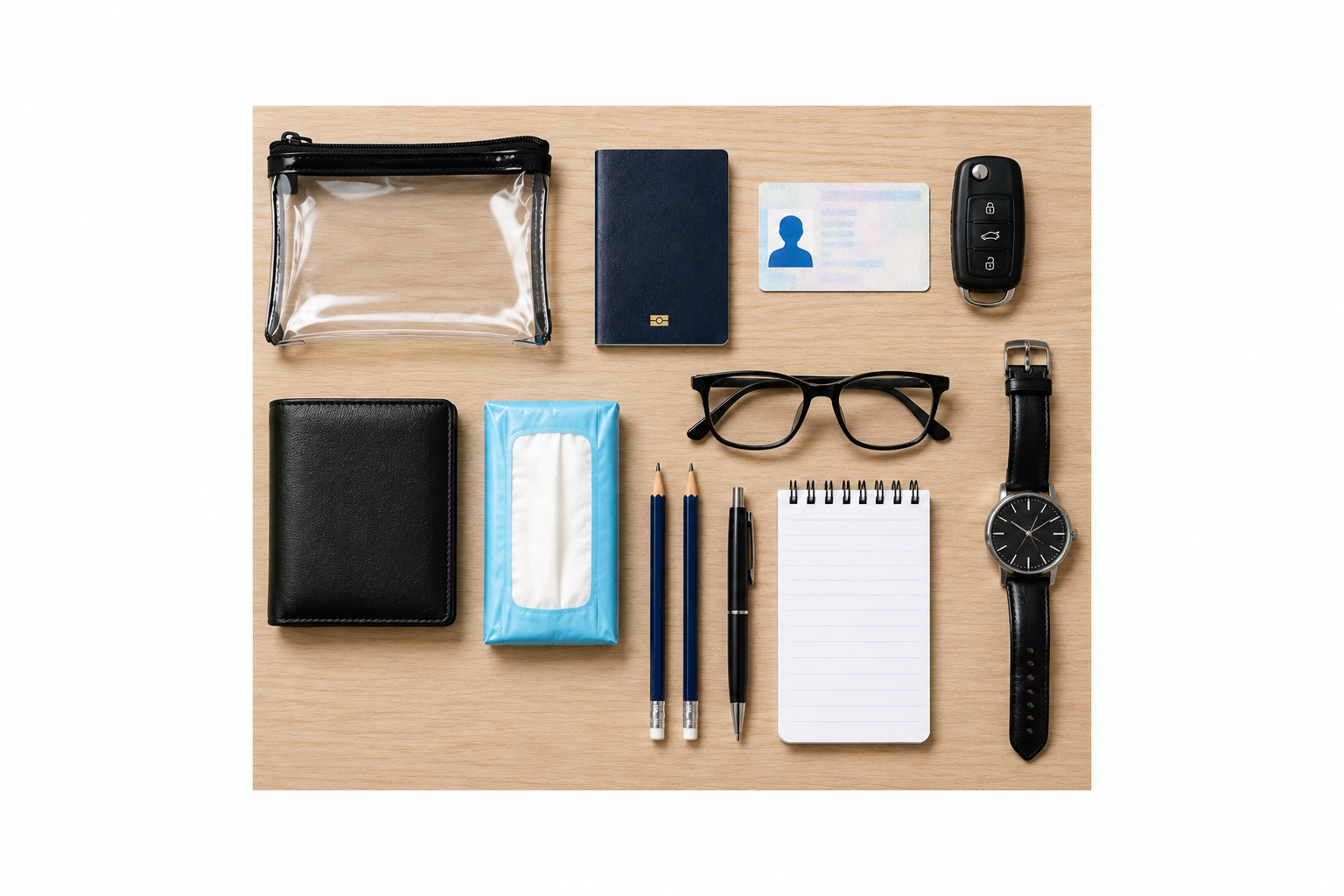
PMP exam day checklist planning separates candidates who walk in confident from those who get turned away at the door. You have studied for months. You have completed practice exams, reviewed the PMBOK, and worked through every process group. But arriving at your Pearson VUE testing center without the right documents — or unknowingly breaking a single testing policy — ends your exam before it begins.
This guide tells you exactly what to bring, what to leave behind, and how to show up fully prepared on exam day whether you are sitting in Dubai, London, Toronto, Singapore, or anywhere else in the world.
Why Your PMP Exam Day Checklist Is As Important As Your Study Plan
Most PMP exam cancellations are not caused by knowledge gaps. They happen because of preventable administrative errors — a mismatched name, an expired ID, or a prohibited item discovered at security.
Pearson VUE testing center requirements are enforced consistently and without exceptions globally. Understanding every requirement in advance removes every controllable risk from your exam day experience and keeps your focus where it belongs — on demonstrating your project management expertise.
1. Valid Government-Issued Photo Identification
This is the most critical item on your entire PMP exam day checklist. Without an accepted, valid ID, you will not be allowed to sit your exam under any circumstances — no exceptions, no appeals on the day.
Pearson VUE ID requirements are clear and non-negotiable:
Government-issued only — Passports, national identity cards, and driver's licenses are universally accepted. Employer ID cards and student IDs are never accepted regardless of country.
Valid and unexpired — An expired passport or license results in immediate cancellation regardless of your PMI registration status or how far you traveled to reach the center.
Name must match your PMI account exactly — Every character matters. A missing middle name, a shortened first name, or a spelling variation between your ID and your PMI profile triggers a check-in problem. Verify this before exam day, not on it.
Clear photograph required — Your photo must be current, clearly visible, and recognizable as you.
International candidates: If your government-issued ID is not printed in English, bring a second supporting document that displays your name in English alongside your primary ID. Pearson VUE testing center requirements include regional variations, so always confirm your country-specific rules directly through the PMI website at least one week before your appointment.
2. Your PMI Exam Appointment Confirmation
Save or print your PMI appointment confirmation email and have it accessible at check-in. It should display your full legal name, appointment date and time, testing center address, and exam reference number.
Testing center staff can locate your registration through their system, but having your confirmation number ready removes friction at a moment when you want everything to move smoothly. This is a simple but consistently forgotten item on the what to bring to PMP exam list.
3. A Second Form of Identification
While Pearson VUE ID requirements formally require only one primary government-issued ID, carrying a second document is strongly recommended — particularly for international candidates traveling to unfamiliar cities for their exam.
A credit card bearing your legal name or a secondary government-issued document provides practical backup if any question arises during check-in. This adds thirty seconds to your preparation and eliminates a potential exam-day crisis.
4. Arrive Thirty Minutes Before Your Scheduled Start Time
Arriving early is one of the most underrated PMP exam preparation tips available to any candidate. PMP testing center rules require check-in within a defined window before your appointment. Miss that window and you forfeit your exam slot without refund.
Arriving thirty minutes early gives you time to complete check-in, store your belongings, register your biometrics, and settle your mind before your exam clock starts.
For international candidates unfamiliar with local traffic or public transport, build in additional buffer time. A stressful journey directly reduces cognitive performance during the critical first hour of your exam. This is not a minor detail — it is a measurable performance factor.
5. Know Exactly What Is Prohibited Inside the Testing Room
Understanding PMP exam center policies around prohibited items is as important as knowing what to bring. Every Pearson VUE testing center enforces these rules globally without exception.
Mobile phones and all smartwatches — Every personal electronic device must be stored in the locker provided. Apple Watch, Samsung Galaxy Watch, and all wearable technology are classified as electronic devices and must be removed before entering the testing room.
All study materials — No notes, books, printed documents, or handwritten materials of any kind are permitted. This applies regardless of how brief or seemingly harmless the material appears.
Food and beverages — Most Pearson VUE centers prohibit food and drinks inside the testing room. Confirm your specific center's policy in advance as minor location-based variations exist.
Bags and personal belongings — Everything goes into a secured locker. Carry only your identification and confirmation to the check-in desk.
Excessive jewelry or accessories — Arrive with minimal accessories. Some centers request removal of items that could potentially conceal electronic devices. Keeping it simple prevents unnecessary delays during security screening.
6. Dress in Comfortable Layers
Testing center rooms are frequently air-conditioned to temperatures lower than most candidates expect during a four-hour concentration period. Dressing in layers gives you control over your physical comfort regardless of room temperature.
This is a straightforward PMP exam preparation tip that directly impacts sustained focus across a four-hour examination. Wear something comfortable, professional, and practical. Avoid clothing with excessive metallic elements or complex fastenings that slow down security screening.
7. Understand Biometric Check-In Before You Arrive
Most Pearson VUE testing center locations globally use biometric verification during check-in. Palm vein scanning or fingerprint registration is standard procedure and is repeated each time you re-enter the testing room after a break.
This is routine PMP exam center policy and entirely normal. Knowing about it in advance means you will not be caught off guard during an already high-pressure moment. Walk through it calmly — it takes under sixty seconds
8. Plan Your Break Strategy Before the Exam Starts
The PMP exam includes two optional ten-minute breaks across the four-hour examination period. Your exam timer continues running during breaks, so managing them strategically is a genuine PMI certification exam tip that affects your final score.
Use breaks to decompress, hydrate, and reset your mental focus before approaching the next exam section. Biometric re-verification is required each time you re-enter the room, so factor that into your break timing. Candidates who use breaks intentionally consistently report better sustained performance across the full exam duration.
9. Manage Exam Day Anxiety With the Right Preparation
PMP exam day anxiety tips belong on every serious candidate's checklist because anxiety is the most common performance disruptor on exam day — and it is largely within your control.
The night before your exam, stop studying. Your preparation is complete. Late-night cramming increases cortisol levels without meaningfully improving recall. Quality sleep is your highest-value preparation activity in the twenty-four hours before your exam.
On exam morning, eat a balanced meal, hydrate properly, and leave for the testing center with time to spare. Rushed candidates consistently underperform relative to their actual preparation level. Give yourself the physical and mental conditions to perform at your best.
You verified your PMP exam eligibility documents, completed the PMI application, passed the audit process if required, and prepared thoroughly. That preparation is real. Trust it.
10. Know What Happens Immediately After You Finish
Your preliminary result — pass or fail — is displayed on screen the moment you complete your exam. Your official digital PMI credential is issued within approximately five business days of a passing result. Your physical certificate follows by mail.
If your result is not a pass, PMI permits up to three attempts within your one-year eligibility window. Review your domain performance report carefully, apply targeted PMP exam success tips 2026 to your weakest areas, and reschedule with a clear improvement plan.
Understanding the complete project management professional exam guide process from registration through credentialing removes uncertainty and keeps your focus sharp at every stage.
Walk Into Your Pearson VUE Testing Center Fully Ready
Your PMP exam day checklist is the final layer between months of disciplined preparation and the credential that defines your project management career. Carry the right ID, arrive early, know every rule, dress for comfort, and manage your mindset with the same intentionality you applied to your studies.
Every item on this list is within your control. Handle the controllables perfectly — and then go demonstrate everything you have worked for.
Good luck. You are more ready than you think.