
Old vs New PMP Vocabulary After the 2026 Syllabus Update
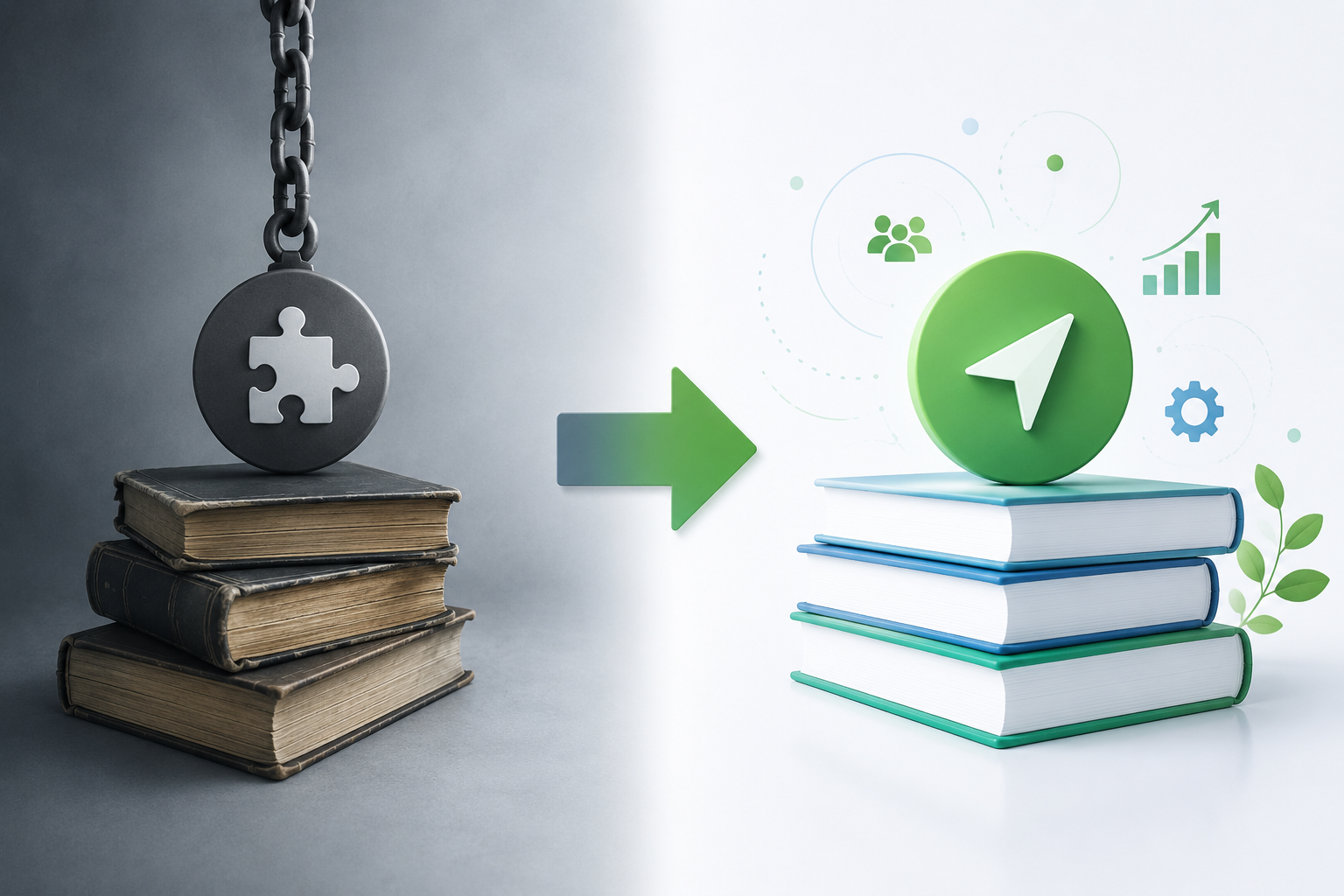
Old vs New PMP Vocabulary After the 2026 Syllabus Update
The PMP vocabulary 2026 syllabus update has quietly become one of the biggest stumbling blocks for candidates preparing for the new exam. You open a practice question, read a term you have studied for weeks, and realize the word on screen does not match what you memorized. Not because the concept changed, but because PMI changed what it is called. The 2026 PMP Examination Content Outline introduced a deliberate language shift that moves away from process-heavy, predictive-era terminology toward outcome-driven, hybrid-aware vocabulary. If your study notes still use the old terms, you are preparing for an exam that no longer exists. This article maps the old vocabulary to the new, explains why each change was made, and shows you what to focus on for PMP exam preparation 2026.
Why PMI Changed the PMP Vocabulary in the 2026 Syllabus Update
The PMP exam changes 2026 did not happen in isolation. They are the direct result of PMI recognizing that the language of the exam was drifting away from the language practitioners actually use on real projects in 2026. The old vocabulary was rooted in the process-group framework of PMBOK editions one through six. It was precise, structured, and deeply familiar to professionals trained in waterfall and predictive delivery environments. But it was increasingly foreign to the agile, hybrid, and product-oriented delivery models that now dominate the industry.
The PMP Examination Content Outline 2026 restructured the exam around three domains: People, Process, and Business Environment. The vocabulary follows that restructuring. Terms that described sequential, phase-by-phase delivery have been replaced or reframed to reflect iterative, adaptive, and outcome-focused language that works equally well in predictive, agile, and hybrid contexts.
Understanding this shift is not just useful for passing the exam. It reflects how project management leadership is actually communicated in organizations today. If you are self-studying or using older prep materials, this article fills that gap directly.
The Complete Old vs New PMP Terms Comparison
The sections below cover the most significant PMP ECO 2026 terminology changes, organized by domain area. Each entry shows the old term, the replacement term, and a brief explanation of what the change signals.
Domain 1: People
Old Term: Stakeholder Management
New Term: Stakeholder Engagement
The shift from management to engagement is intentional. Management implies control and administration. Engagement implies active, ongoing relationship-building. The 2026 exam tests your ability to bring stakeholders into the process, not simply report to them or manage their expectations at arm's length.
Old Term: Team Development
New Term: Team Performance and Culture
The updated PMP vocabulary list reflects the recognition that high-performing teams are shaped by culture as much as by skills development. The 2026 exam expects candidates to understand psychological safety, servant leadership, and the environment that enables team effectiveness, not just training plans and competency matrices.
Old Term: Conflict Resolution
New Term: Conflict Management and Leadership Response
The new framing acknowledges that conflict is not always resolved. Sometimes it is navigated, de-escalated, or channeled productively. The 2026 exam tests situational judgment about when to intervene and how, not formula-based resolution steps.
Old Term: Resource Management
New Term: Team and Physical Resource Stewardship
Stewardship language is new to PMP predictive vs agile terminology. It signals a values-based approach to resources that emphasizes responsibility, sustainability, and long-term organizational impact alongside immediate project needs.
Domain 2: Process
Old Term: Planning Process Group
New Term: Delivery Approach Planning
This is one of the most significant PMP vocabulary 2026 syllabus update changes. The process-group model is gone from exam framing. Planning is now described in terms of what delivery approach the project uses, predictive, iterative, agile, or hybrid, and how planning adapts to that approach. Fixed five-phase process group language no longer drives exam questions.
Old Term: Scope Management
New Term: Requirements and Scope Definition
The word requirements is added deliberately. In agile and hybrid environments, scope is not defined upfront and fixed. It emerges through requirement elaboration across iterations. The updated PMP vocabulary list reflects that distinction, and exam questions test your ability to work with evolving scope, not just control it against a baseline.
Old Term: Work Breakdown Structure (WBS)
New Term: Decomposition and Backlog (context-dependent)
WBS remains valid in predictive contexts and is not removed from the exam. However, the PMP ECO 2026 terminology changes introduce backlog as an equally valid decomposition artifact in agile and hybrid environments. Exam questions now specify context, and candidates must recognize which artifact is appropriate.
Old Term: Change Control Board (CCB)
New Term: Change Control and Adaptive Response
In predictive environments, the CCB still applies. But the updated PMP vocabulary reflects that in agile environments, change is expected and managed through backlog refinement and sprint planning, not formal change requests. The exam tests your ability to distinguish between these approaches and choose the right response for the project context.
Old Term: Quality Control
New Term: Quality Assurance and Continuous Improvement
Quality control implied inspection at the end of a phase. The new framing reflects the shift toward building quality in throughout delivery, using retrospectives, definition of done, and continuous integration practices as quality mechanisms alongside traditional inspection techniques.
Old Term: Risk Register
New Term: Risk Register and Risk-Adjusted Backlog
Both artifacts are valid depending on delivery approach. The risk-adjusted backlog is the agile equivalent of the risk register, where risks are captured as backlog items and addressed through prioritization. PMP exam preparation 2026 requires candidates to work comfortably with both.
Old Term: Procurement Management
New Term: Vendor and Contract Governance
The language shift from procurement to governance signals a move from transactional purchasing to ongoing relationship and performance management with external partners. This reflects the longer-term vendor relationships common in technology, infrastructure, and outsourced delivery environments.
Domain 3: Business Environment
Old Term: Organizational Process Assets (OPAs)
New Term: Organizational Knowledge and Governance Assets
OPA remains in use but is now framed within a broader knowledge management context. The 2026 exam tests whether candidates can leverage organizational learning, lessons learned repositories, and governance frameworks, not just access templates and historical data.
Old Term: Enterprise Environmental Factors (EEFs)
New Term: Internal and External Environmental Context
EEF language remains but is tested with greater sophistication in the 2026 exam. Questions now probe how political, regulatory, cultural, and market factors shape delivery decisions, not just what those factors are.
Old Term: Benefits Realization
New Term: Value Delivery and Business Outcomes
This is the most culturally significant change in the updated PMP vocabulary list. The shift from benefits to value reflects the influence of product management and agile thinking on project management. The 2026 exam tests whether candidates can articulate, measure, and optimize value delivery across the project lifecycle, not just document expected benefits at the start.
Old Term: Lessons Learned
New Term: Retrospectives and Knowledge Transfer
In predictive environments, lessons learned are captured at project close. In agile environments, retrospectives happen every sprint. The 2026 exam integrates both and tests candidates on timing, facilitation, and how insights are transferred back into organizational practice.
What This Means for Your PMP Exam Preparation 2026
Knowing the old vs new PMP terms matters most at the level of exam questions, not just vocabulary lists. PMI scenario-based questions are written in the new language. If you see a question about managing stakeholder engagement in an adaptive environment and your instinct is to build a formal stakeholder management plan and communication matrix, you may be applying the right concept but with the wrong framing for the context described.
The changes in PMP certification 2026 candidates need to understand most urgently are these vocabulary shifts combined with the context-sensitivity of the new exam. Questions are not asking you to recall a definition. They are asking you to apply the right approach in the right context, predictive, agile, or hybrid, using the language and mindset appropriate to that environment.
Pay particular attention to how principle-based language in PMBOK 8 aligns with the new ECO vocabulary. The two documents reinforce each other. PMBOK 8 principles like stewardship, value focus, and systems thinking map directly to the new vocabulary in the PMP Examination Content Outline 2026.
The Terms That Did Not Change
Not everything in the updated PMP vocabulary list is new. Several foundational terms remain consistent across the old and new syllabus, which is useful to know when filtering prep materials.
Project Charter, Project Sponsor, Stakeholder Register, Project Manager, Scope Baseline, Schedule Baseline, Cost Baseline, Risk Register, Issue Log, and Lessons Learned Repository all remain in active use in the 2026 exam. What changed is not the existence of these artifacts but the context-sensitivity with which the exam now tests them. The exam no longer assumes all projects are predictive. These artifacts appear in questions where the context is specified, and candidates must recognize when they apply and when an agile or hybrid equivalent is more appropriate.
Frequently Asked Questions
Does the 2026 PMP exam use PMBOK terminology or ECO terminology?
Both, but the PMP ECO 2026 terminology changes take precedence in how questions are written. The ECO defines the domains, tasks, and enablers that drive exam content. PMBOK 8 provides the principles and knowledge foundation. When the two use different language for the same concept, the ECO framing is what you will see in exam questions.
Are old PMP prep books still useful for the 2026 exam?
Older books aligned to PMBOK 6 and the pre-2021 ECO are significantly outdated. Books aligned to the 2021 ECO are partially useful but miss the 2026 updates including the vocabulary shifts, the Business Environment domain weight increase, and the integration of PMBOK 8 principles. Use them only as supplementary reading alongside current ECO-aligned materials.
How many vocabulary changes are there in the PMP syllabus update 2026?
PMI has not published a definitive count, but the changes span all three domains with the most significant shifts in Process and Business Environment. The old vs new PMP terms covered in this article represent the highest-frequency terms appearing in current exam questions and practice sets.
Will the old process group terminology appear in any 2026 exam questions?
Process group names such as Initiating, Planning, Executing, Monitoring and Controlling, and Closing are no longer used as exam framing. However, the concepts behind them are tested through the new domain and task language. You should understand the processes, but the exam does not test them using the old five-group structure.
How do I stay current as PMI continues to update the exam?
Follow the official PMI ECO document as your primary reference and supplement with a trainer actively aligned to the 2026 updates. Check the PMP certification training page to learn more about upcoming cohorts fully updated to reflect the 2026 syllabus, vocabulary shifts, and PMBOK 8 integration.
The PMP vocabulary 2026 syllabus update is not a minor revision. It is a signal from PMI that the exam is now testing a different kind of project manager, one who can move fluidly between predictive and adaptive environments and communicate in the language of value, outcomes, and engagement rather than processes, phases, and control. Getting comfortable with the new terminology before exam day is not optional. It is the difference between reading a question and understanding it. If you are ready to prepare with a trainer fully aligned to the 2026 ECO and PMBOK 8, RJ Visakh, India's leading PMP trainer with a 99% pass rate and over 10,000 professionals mentored, is accepting registrations for the next cohort now.