
How to Run a Post-Mortem Meeting People Actually Want to Attend
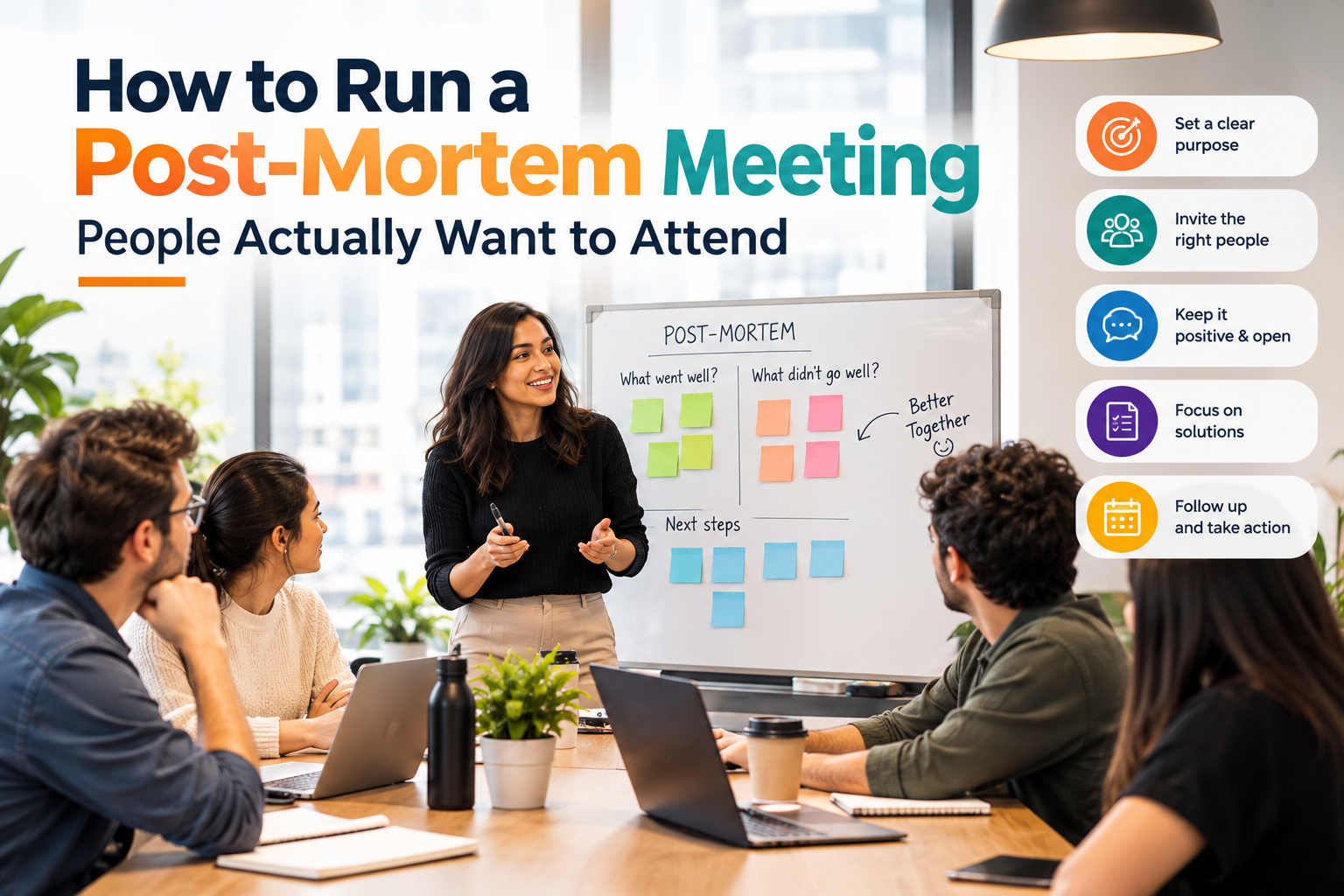
A post-mortem meeting has a reputation problem — most team members dread them, expecting either an uncomfortable blame session or a hollow formality where everyone says "it went well" and moves on without genuine reflection. Neither outcome actually improves future project performance, which is the entire point of running one in the first place.
This guide covers how to design a post-mortem meeting people genuinely want to attend, drawing honest feedback and real lessons learned rather than the polite silence or defensive posturing that sinks most post-project reviews.
Why Most Post-Mortem Meetings Fail to Deliver Value
The typical project post-mortem meeting fails for one of two predictable reasons. Either it becomes an uncomfortable exercise in identifying who's to blame for what went wrong, making team members defensive and guarded rather than honest. Or it becomes so vague and unstructured that people share surface-level observations without any genuine depth, producing a meeting that technically happened but changed nothing about how future projects get run.
Understanding these failure patterns is the first step toward designing something genuinely different — a meeting structure that actively works against both blame and vagueness.
Setting the Right Tone Before the Meeting Even Starts
Post-Mortem Meeting Best Practices begin well before anyone sits down in the room. How you frame the meeting's purpose in advance significantly shapes whether people arrive ready to contribute honestly or ready to defend themselves.
Framing It as Learning, Not Judgment
Explicitly communicating that the meeting exists to improve future projects, not to assign blame for this one, matters more than most facilitators realize. A simple pre-meeting message stating "we're here to learn, not to find fault" sets expectations that make honest participation significantly more likely.
Giving People Time to Reflect Beforehand
Sending a short reflection prompt a day or two before the meeting — asking team members to jot down what went well, what didn't, and what they'd do differently — produces far richer discussion than expecting people to generate thoughtful insights on the spot during the meeting itself.
Building a Post-Mortem Meeting Agenda That Actually Works
A well-structured post-mortem meeting agenda moves through distinct phases, each serving a specific purpose in surfacing genuine insight rather than generic commentary.
Open with context setting, briefly recapping the project's original goals and actual outcomes to ground the discussion in shared facts
Start with what went well, building psychological safety before moving into more difficult territory
Move into challenges and obstacles, framed around processes and systems rather than individual performance
Identify specific, actionable lessons learned, avoiding vague takeaways that won't actually change future behavior
Assign ownership for follow-up actions, ensuring insights translate into genuine process changes rather than simply being documented and forgotten
Techniques for Encouraging Honest Participation
Getting genuine, honest input requires more than simply asking good questions — it requires structural techniques that make honesty easier than silence.
Anonymous Input Before Open Discussion
Collecting initial feedback anonymously, through a simple shared document or quick survey, often surfaces concerns that people hesitate to voice directly in a group setting, especially regarding sensitive issues involving leadership decisions or interpersonal team dynamics.
Round-Robin Sharing Instead of Open Floor
Rather than asking "does anyone have thoughts?" — which tends to favor the most vocal team members — going around the room and asking each person directly for one observation ensures quieter team members contribute meaningfully rather than staying silent throughout.
Separating Process Issues From People Issues
Explicitly framing discussion around "what in our process allowed this issue to happen" rather than "who caused this issue" redirects conversation toward systemic improvement rather than individual blame, making people significantly more willing to discuss genuine problems honestly.
Project Retrospective Meeting Formats Worth Trying
Different project retrospective meeting formats suit different team dynamics and project types, and varying your approach periodically keeps the process from becoming stale and predictable.
Start, Stop, Continue
A simple, widely used format asking what the team should start doing, stop doing, and continue doing going forward. This structure works particularly well for teams newer to post-mortem processes, since it's intuitive and easy to facilitate.
Sailboat Retrospective
A visual metaphor format where the team identifies "wind" (things that helped progress), "anchors" (things that held the team back), and "rocks" (risks ahead), offering a slightly more engaging alternative to purely verbal discussion formats for teams that respond well to visual facilitation techniques.
Turning Project Lessons Learned Into Real Change
Capturing project lessons learned is worthless if those insights simply get documented and filed away without ever influencing how future projects actually get run. A few practices help ensure genuine follow-through:
Assign a specific owner to each identified action item, not just a general team commitment
Set a realistic timeline for implementing process changes, rather than leaving them indefinitely open-ended
Reference past lessons learned at the start of new projects, ensuring previous insights actually inform future planning rather than being rediscovered repeatedly
Track recurring themes across multiple post-mortems, since patterns appearing in several projects often reveal deeper systemic issues worth prioritizing
Effective Post-Mortem Meetings: The Facilitator's Role
Effective Post-Mortem Meetings depend heavily on skilled facilitation, since the facilitator's tone and ability to manage difficult moments significantly shapes whether the discussion stays productive or devolves into defensiveness or vague platitudes.
A strong facilitator actively redirects blame-oriented comments toward process-focused framing, draws out quieter participants deliberately, and maintains enough structure to keep the conversation moving without making it feel rigidly scripted or impersonal.
This kind of composed, skilled facilitation draws on the same psychological presence and professional authority that distinguishes project leaders who can navigate difficult, emotionally charged conversations from those who either avoid them entirely or mishandle them when they arise.
Project Review Meeting Timing: When to Hold It
A project review meeting should ideally happen relatively soon after project completion, while details and emotions remain fresh enough for genuine, specific reflection, but not so immediately that people haven't had any time to process the project's conclusion with some perspective. Most teams find a window of one to two weeks after project completion strikes this balance effectively.
Project Team Retrospective: Building a Recurring Habit
Treating a project team retrospective as a one-time event, held only for major project failures, misses significant value. Teams that build a genuine habit of regular, lightweight retrospectives — not just formal post-mortems after major projects — develop stronger collective reflection muscles that make even high-stakes post-mortems feel more natural and less intimidating when they're genuinely needed.
Post-Project Review Meeting: A Practical Example
Consider a software development team that just completed a project with a significant timeline slip. Rather than opening with "let's discuss why we missed our deadline," a well-structured post-project review meeting might open with: "Let's start by reviewing what the original timeline assumed, then walk through what actually happened at each stage, focusing on what we can change in our planning process going forward."
This framing immediately shifts the conversation from defensive blame-avoidance toward genuine, collaborative problem-solving — exactly the tone that produces a post-mortem meeting people actually find valuable rather than dreading.
Making This a Genuine Project Management Best Practice
Building strong post-mortem facilitation skills reflects broader Project Management Best Practices that distinguish teams with genuine continuous improvement cultures from those that simply complete projects and move on without ever examining what could be done better.
This kind of structured, honest reflection practice is exactly what I help project managers and team leaders build through coaching, translating meeting facilitation theory into genuinely confident practice. If you're looking to improve how your team conducts post-project reviews, what a PMP coach actually helps with extends well beyond exam preparation into exactly this kind of practical leadership skill.
Building This Skill Into Your Leadership Practice
Running genuinely effective post-mortem meetings is a skill built through deliberate practice and honest self-reflection on your own facilitation approach, not something that improves automatically through repetition alone. If you want to build this capability deliberately, it's exactly the kind of practical, scenario-based coaching I offer at rjvisakh.com.
FAQs
How long should a post-mortem meeting typically last?
Most post-mortem meetings run effectively within 60 to 90 minutes, depending on project complexity, allowing sufficient depth without exhausting participants' attention and honesty.
Should post-mortem meetings include senior leadership?
It depends on team dynamics. Leadership presence can sometimes inhibit honest feedback, so some teams hold a team-only session first before a separate leadership debrief.
What's the biggest mistake teams make in post-mortem meetings?
Framing discussion around individual blame rather than systemic process issues, which makes team members defensive and significantly reduces genuine, honest participation.
How often should teams hold retrospective meetings?
Regular, lightweight retrospectives throughout a project, not just one formal post-mortem at the end, build stronger reflection habits and catch issues earlier.
How can I ensure lessons learned actually lead to real change?
Assign specific owners and timelines to action items, and deliberately reference past lessons learned when planning future projects rather than filing insights away unused.
Ready to run post-mortems your team actually values? Talk to Visakh RJ →
Visakh RJ | PMP Coach · Speaker · Mindset Alchemist
📍 Mumbai, India | 📞 +91 62825 40905