
Case Study: Turning Around a Delayed Construction Project With Agile-Hybrid Thinking
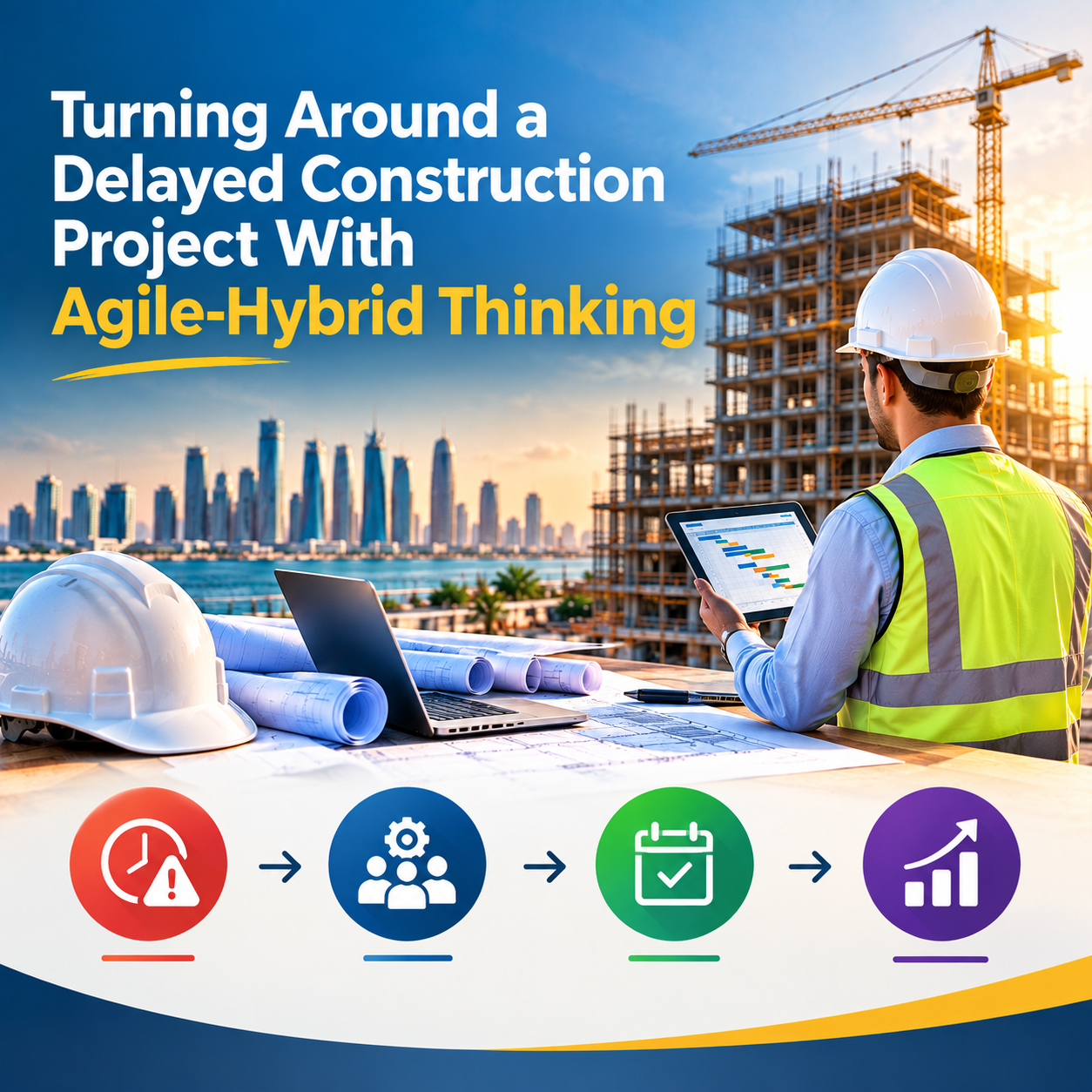
An agile-hybrid approach for delayed construction projects rescued a stalled mid-rise commercial build that was fourteen weeks behind schedule and hemorrhaging budget on rework. This case study follows how a program lead combined traditional construction sequencing with agile sprint discipline to bring the project back on track within three months.
Construction has historically resisted agile methodology, and for good reason — you can't build a foundation in two-week sprints. But this agile-hybrid approach for delayed construction projects shows exactly where agile thinking adds real value inside a fundamentally sequential, phase-driven environment, without abandoning the structure construction genuinely needs.
Background: A Construction Project Management Case Study in Crisis
The project was a seven-story commercial building, originally planned on a strict waterfall schedule with fixed milestones for each construction phase. By month eight, the project had missed two major milestones, coordination between MEP, structural, and finishing contractors had broken down, and rework costs were climbing fast due to sequencing conflicts between trades.
This kind of situation is common in construction project management case study scenarios where rigid, linear planning meets the inherent unpredictability of real construction — weather delays, material shortages, and design changes that ripple through a fixed schedule with no built-in flexibility to absorb them.
Diagnosing the Problem: Why Pure Waterfall Was Failing
Before introducing any changes, the incoming program lead spent two weeks auditing the root causes, applying the same diagnostic discipline central to any credible how to recover a delayed construction project effort. Three core issues emerged:
Rigid milestone dependencies meant a single delay in structural work cascaded through every downstream trade, with no mechanism to adjust without renegotiating the entire schedule
Poor cross-trade communication, with MEP and finishing contractors working from outdated drawings that hadn't reflected recent design changes
No feedback loop for emerging risks, meaning problems surfaced only after they'd already caused delays, not while they were still manageable
This diagnosis pointed toward a clear conclusion: the project didn't need to abandon its structured phase gates, but it desperately needed a faster feedback and coordination mechanism layered on top.
Combining Agile and Waterfall Construction: The Hybrid Model
Combining agile and waterfall construction doesn't mean running the entire build in sprints. It means preserving the sequential, milestone-driven backbone construction requires, while introducing agile's short feedback cycles for coordination, risk surfacing, and cross-trade communication.
This is a practical agile hybrid framework real-world example of how the two methodologies complement rather than compete with each other in a physical build environment.
Layer One: Waterfall Remains the Structural Backbone
The overall project sequence — foundation, structure, MEP rough-in, finishing — stayed strictly waterfall, because construction physics doesn't allow skipping or overlapping certain phases. Major milestones, permits, and inspections remained fixed, non-negotiable gates.
Layer Two: Agile Sprints for Coordination and Risk Surfacing
Within each waterfall phase, the team introduced two-week coordination sprints. Each sprint began with a planning session where trade leads flagged upcoming dependencies and potential conflicts, and ended with a review identifying what had actually been completed versus planned — surfacing problems within two weeks instead of at the next monthly milestone review.
This is agile hybrid project management applied precisely where it adds value: not to the physical sequence of building, but to the coordination and communication layer running alongside it.
Implementing the Hybrid Project Management Approach in Construction
Rolling out this hybrid project management approach construction teams could actually follow required three concrete changes:
Daily 15-minute standups between trade leads, surfacing blockers before they cascaded into schedule delays
A shared, living risk register reviewed at every sprint review, replacing the outdated practice of only discussing risks at monthly stakeholder meetings
Two-week look-ahead planning, where each trade committed to specific, verifiable deliverables rather than vague monthly targets
This structure gave the project the responsiveness of agile methodology in construction projects without disrupting the fixed sequencing that safety and structural integrity genuinely require.
Applying Project Recovery Strategies to a Live Build
The recovery didn't stop at process changes. Applying broader project recovery strategies construction teams rely on, the program lead also renegotiated two milestone dates with the client transparently, backed by data from the newly implemented sprint reviews showing a credible, realistic path forward rather than another optimistic promise.
This transparency, paired with visibly tighter coordination between trades, began rebuilding client confidence within the first month of the new approach — well before the schedule itself had fully recovered.
Results: Delayed Project Turnaround Strategies in Action
Within twelve weeks of implementing the hybrid model, cross-trade rework dropped by roughly 60%, driven almost entirely by the two-week coordination sprints catching conflicts before they became physical rework. The project recovered eight of its original fourteen-week delay and finished the remaining phases on the renegotiated schedule without further slippage.
These delayed project turnaround strategies worked not because agile replaced traditional construction management, but because it filled a specific gap: fast, structured feedback loops that waterfall planning alone doesn't provide.
Construction Project Turnaround Case Study: Key Lessons
This construction project turnaround case study offers lessons applicable well beyond this specific build:
Waterfall structure and agile feedback loops aren't competitors — combining them addresses different problems within the same project
Short feedback cycles catch coordination failures early, before they become costly rework
Transparent renegotiation with clients, backed by real data, rebuilds trust faster than silence or false optimism
A living risk register, reviewed frequently, outperforms static risk documentation reviewed only at major milestones
Why This Matters for Construction and Program Leads
Many PMP and Agile-certified professionals learn these frameworks separately, without guidance on how to blend them for genuinely hybrid environments like construction, where physical sequencing constraints meet the need for flexible coordination. Applying an agile-hybrid approach for delayed construction projects requires judgment about where each methodology adds value — a skill built through guided practice rather than certification alone.
This is exactly the kind of applied, scenario-based thinking I work through with mentees, translating PMBOK and agile theory into frameworks that hold up on real, physical builds. If you're navigating a similarly complex hybrid environment, what a PMP coach actually helps with extends well beyond single-methodology exam prep.
Leading Through a Construction Recovery With Confidence
Rebuilding trust with a client mid-crisis, coordinating frustrated trade leads, and holding steady while renegotiating milestones all draw on the same psychological presence and professional authority that separates project leads who manage a recovery calmly from those who let pressure dictate their decisions.
If you're a construction or program lead facing a similarly delayed, at-risk project, this kind of structured coaching is exactly what I offer at rjvisakh.com — turning hybrid frameworks into practiced, confident leadership on real builds.
FAQs
Can agile really work in construction projects?
Yes, when applied selectively. Agile's short feedback loops work well for coordination and risk surfacing, while the physical build sequence typically remains waterfall due to structural and safety constraints.
What's the first step in recovering a delayed construction project?
Diagnose root causes before changing process. Audit milestone dependencies, communication gaps, and risk visibility before introducing any new framework or renegotiating timelines.
How do you combine agile and waterfall without disrupting construction sequencing?
Keep major phase gates and milestones strictly waterfall, while layering agile-style short sprints, daily standups, and frequent risk reviews on top for coordination and communication.
Is renegotiating milestones with a client a sign of project failure?
Not when backed by transparent, data-driven reasoning. Clients generally respond better to honest, credible renegotiation than to silence followed by another missed deadline.
How can a program lead learn to apply hybrid frameworks effectively?
Structured coaching and real scenario practice build the judgment needed to blend methodologies appropriately, a skill that goes beyond what standard certification training alone provides.
Ready to lead your next project recovery with confidence? Talk to Visakh RJ →
Visakh RJ | PMP Coach · Speaker · Mindset Alchemist
📍 Mumbai, India | 📞 +91 62825 40905