
Case Study: A Healthcare PM's Journey From Task-Tracker to Strategic Leader
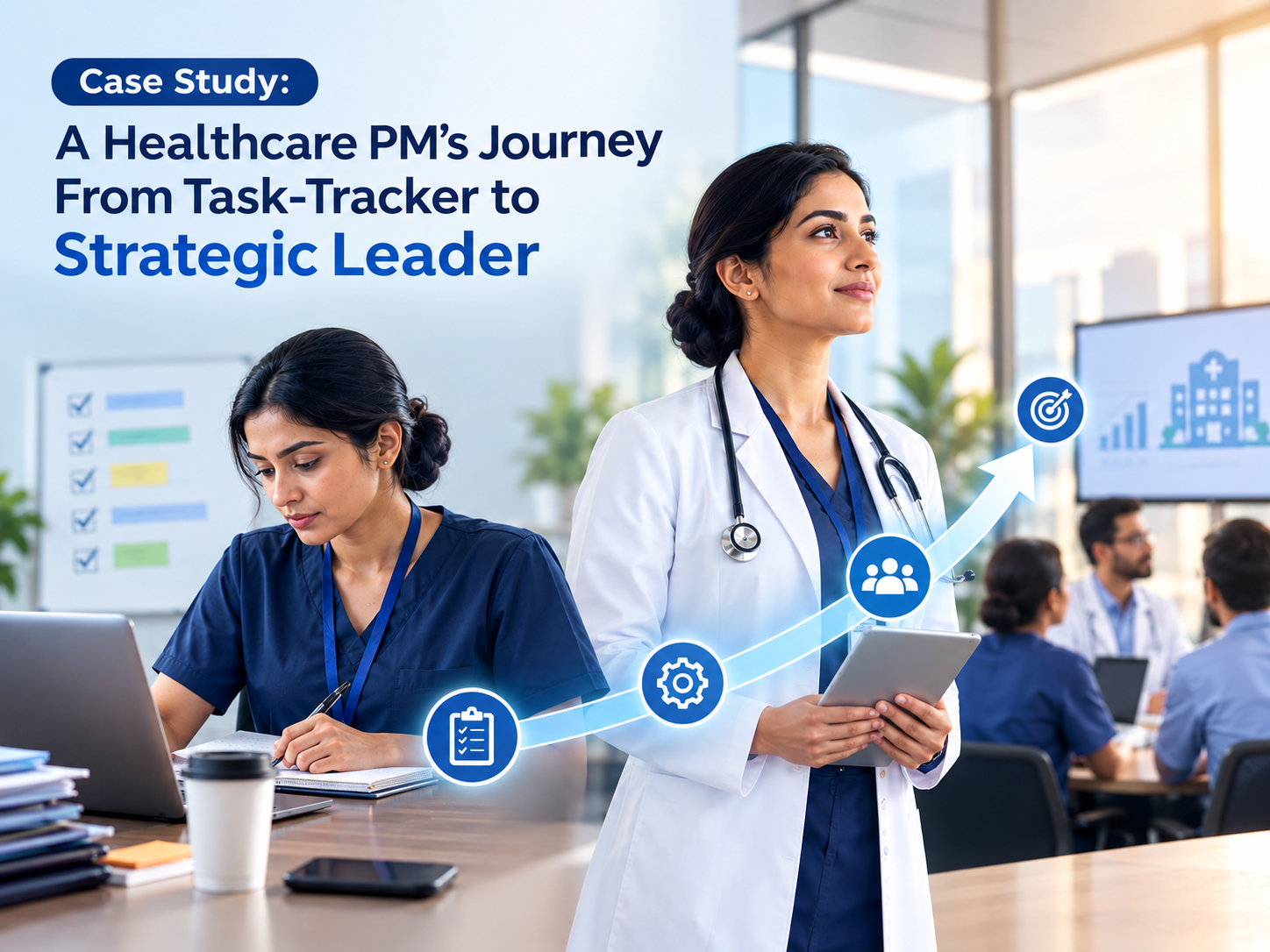
Every Healthcare Project Manager starts somewhere close to the same place — tracking tasks, updating status reports, and coordinating schedules for projects someone else designed. The transition from that starting point to genuine strategic leadership isn't automatic, and it doesn't happen through tenure alone. This case study walks through what that journey actually looks like, the specific skill and mindset shifts involved, and what it means for anyone currently stuck in the task-tracking phase of their career.
Where Most Healthcare Project Managers Start
Early in their careers, most professionals in Healthcare Project Management spend the bulk of their time on execution — updating Gantt charts, chasing status updates from clinical and IT teams, and reporting progress upward without much input into why a project exists or what strategic outcome it's meant to deliver. This isn't a failure; it's simply where the role typically begins, especially in complex healthcare environments juggling compliance, clinical workflows, and technology rollouts simultaneously.
The problem arises when a PM stays in this mode indefinitely — becoming excellent at tracking work without ever developing the judgment to shape it.
The Turning Point: From Reporting Status to Owning Outcomes
The shift toward genuine Healthcare PM Leadership typically begins with a specific moment — a project where the PM starts asking "why" questions rather than just "when" questions. Why does this initiative matter to the hospital's broader strategy? Why are we prioritizing this system rollout over another competing project? What outcome are we actually trying to achieve for patients or staff?
This case follows a composite pattern seen repeatedly across healthcare PM career transitions: a project manager coordinating an electronic health record rollout who, instead of simply tracking the implementation timeline, began engaging directly with clinical leadership about workflow impact — surfacing risks the technical team hadn't considered, because nobody had asked frontline staff how the change would actually affect their daily work.
That single shift — from passive tracking to active questioning — is often the real inflection point separating task-focused PMs from strategic ones.
Healthcare Project Manager Skills That Matter Beyond Scheduling
Building genuine Healthcare Project Manager Skills beyond scheduling and status tracking requires developing capabilities the standard PM toolkit doesn't automatically teach:
Clinical and operational fluency — understanding enough about how a hospital or clinic actually operates to spot risks that a purely technical or administrative view would miss
Stakeholder translation — the ability to move between clinical staff, IT teams, compliance officers, and executive leadership, translating each group's concerns into language the others understand
Compliance-aware planning — healthcare projects carry regulatory weight that many other industries don't, and PMs who understand this early avoid costly late-stage compliance surprises
Change management for clinical environments — technology and process changes in healthcare settings face unique resistance patterns tied to patient safety concerns, requiring a different change approach than a typical corporate rollout
Strategic Leadership in Healthcare: What It Actually Looks Like Day to Day
Strategic Leadership in Healthcare project management doesn't announce itself dramatically — it shows up in small, consistent decisions. It looks like pushing back on an unrealistic timeline because you understand the clinical risk of rushing implementation. It looks like proactively flagging a budget conversation with executive sponsors before a shortfall becomes a crisis, rather than waiting to be asked. It looks like being the person in the room whose judgment gets sought before a decision is made, not just informed after.
This case's composite PM reached this point roughly three years into her career — not through a single dramatic moment, but through a consistent pattern of taking ownership beyond her formal job description.
Healthcare Project Management Career: Common Inflection Points
Across many Healthcare Project Management Career trajectories, a few recurring inflection points tend to mark the shift toward strategic leadership:
Leading a project with genuine ambiguity — where the scope wasn't fully defined upfront, forcing the PM to make judgment calls rather than follow a predetermined plan
Navigating a stakeholder conflict directly — rather than escalating every disagreement upward, learning to resolve tension between clinical and technical priorities personally
Being asked for input before a decision, not just execution after one — a clear signal that leadership has started viewing the PM as a strategic partner rather than a coordinator
Mentoring a junior PM or coordinator — teaching forces genuine reflection on what actually matters versus what's just process for its own sake
Healthcare Project Manager Career Growth: What Accelerates It
Understanding what genuinely accelerates Healthcare Project Manager Career Growth matters for anyone feeling stuck in the task-tracking phase. A few factors consistently show up in PMs who make this transition faster than their peers:
Seeking out ambiguous, higher-stakes projects rather than staying in the comfort zone of well-defined, low-risk assignments
Building relationships with clinical and executive stakeholders proactively, not just when a project requires it
Investing in structured certification and mentorship — formal PMP training combined with mentorship from experienced leaders accelerates the judgment-building process that experience alone can take years to build
Practicing the "why" question habit deliberately — consistently asking what strategic outcome a task serves, not just how to complete it efficiently
Healthcare Project Planning: Where Strategic Thinking Actually Gets Applied
The difference between task-tracking and strategic leadership becomes most visible in Healthcare Project Planning itself. A task-focused PM plans by breaking down deliverables and assigning dates. A strategic PM plans by first understanding the business and clinical case for the project, then building a plan that protects the outcomes that actually matter — even when that means pushing back on a timeline or scope decision that technically "works" on paper but doesn't serve the real goal.
Healthcare PM Best Practices Drawn From This Journey
A few Healthcare PM Best Practices emerge clearly from this kind of career transition:
Ask why before asking when — understanding purpose changes how you plan, prioritize, and communicate about a project
Build cross-functional relationships before you need them — trust built early makes difficult conversations easier when they inevitably arise
Treat compliance and clinical risk as strategic inputs, not just checklist items to clear before moving forward
Seek mentorship deliberately — the judgment gap between task-tracking and strategic leadership closes faster with guidance from someone who's already made that transition
From Project Manager to Strategic Leader: What This Means for You
If you recognize yourself in the task-tracking phase of this journey, the Project Manager to Strategic Leader transition isn't about waiting for tenure to accumulate — it's about deliberately practicing the habits described here: asking why, building relationships proactively, and seeking out ambiguous, higher-stakes work rather than avoiding it. Structured PMP training and mentorship can meaningfully compress this timeline, giving you frameworks and guidance that experience alone takes years to build organically.
The Bottom Line
The journey from task-tracker to strategic leader in Healthcare Project Management isn't defined by a single dramatic breakthrough — it's built through consistent habits: asking why instead of just when, engaging stakeholders proactively, and treating compliance and clinical risk as strategic considerations rather than administrative hurdles. For healthcare PMs currently feeling stuck in execution mode, this transition is available to anyone willing to practice these habits deliberately.
Frequently Asked Questions
Q1: How long does it typically take a healthcare PM to move from task-tracking to strategic leadership?
This varies significantly by individual and opportunity, but many PMs report a noticeable shift around the two-to-three-year mark, particularly when they've sought out ambiguous, higher-stakes projects rather than staying in comfortable, well-defined roles.
Q2: Does PMP certification help with this transition?
Yes — structured certification provides frameworks for stakeholder management, risk, and strategic alignment that support the judgment-building process, especially when paired with mentorship from experienced healthcare project leaders.
Q3: What's the biggest mistake healthcare PMs make that keeps them in task-tracking mode?
Staying exclusively in well-defined, low-risk assignments and avoiding ambiguous projects, since ambiguity is often where the judgment needed for strategic leadership actually develops.
Q4: How important is clinical knowledge for a healthcare project manager's career growth?
Genuine operational and clinical fluency significantly accelerates trust-building with stakeholders and helps PMs spot risks that a purely administrative or technical view would miss.
Q5: Can mentorship actually accelerate this career transition?
Yes — mentorship from someone who has already made this transition can meaningfully compress the timeline by providing judgment and frameworks that experience alone typically takes years to develop.
Ready to accelerate your own transition from task-tracking to strategic leadership? Explore PMP coaching with Visakh RJ in Mumbai, or read real student testimonials from professionals who've built genuine leadership skills. Browse the PMP blog for more real-world project management guidance.
Start Your PMP Journey — Enquire on WhatsApp →
Visakh RJ — PMP Coach · Speaker · Mindset Alchemist
📞 +91 62825 40905
📍 Mumbai, India