
Applying the PMP Communication Model to Difficult Client Emails
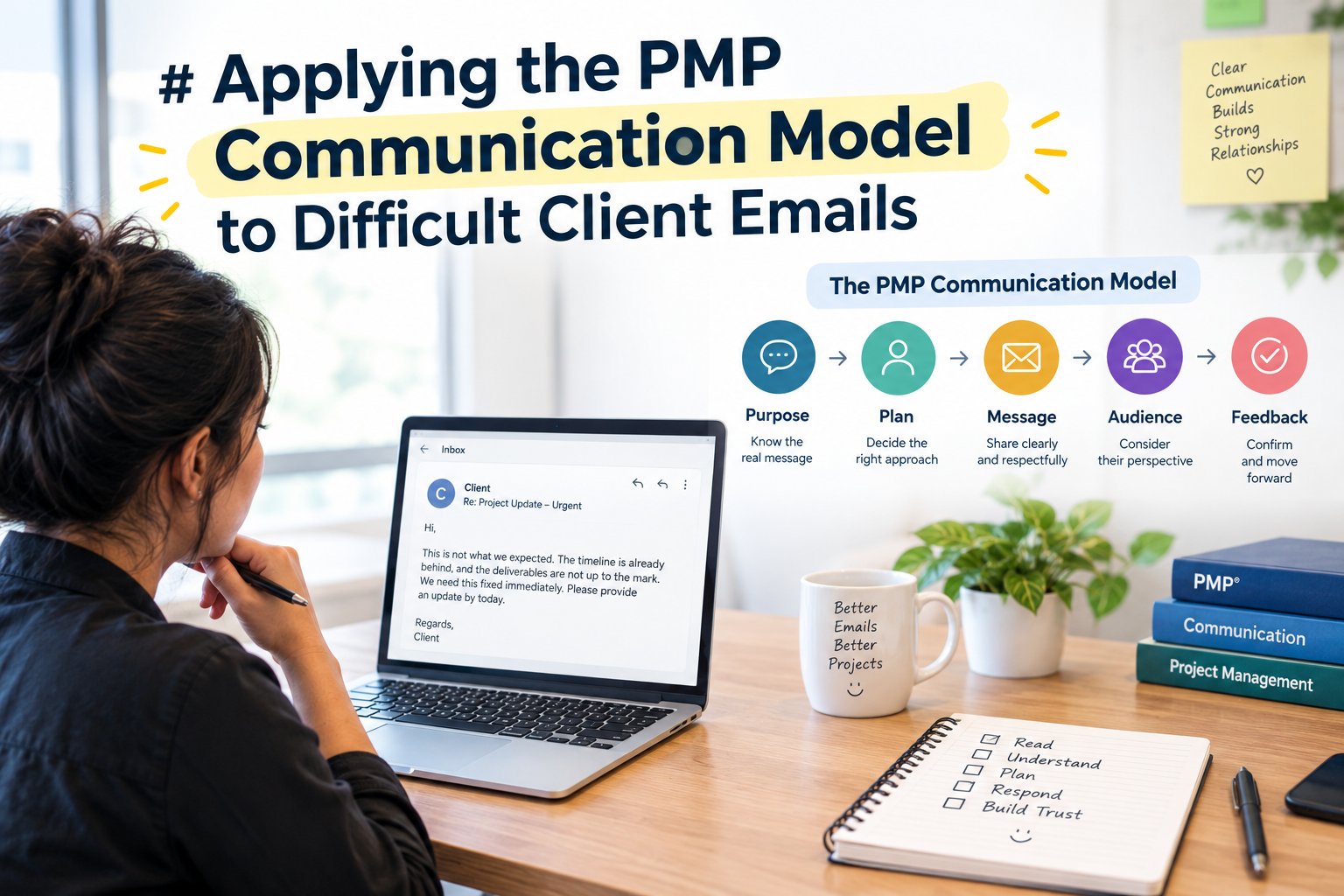
The PMP communication model for client emails is one of the most underused frameworks in a project manager's toolkit, even though it was built precisely for moments like a tense client update or a delayed-deliverable notice. Most project managers learn the model for the exam, then quietly forget it exists the moment a real, high-stakes email needs to go out.
That's a missed opportunity. The PMP communication model for client emails isn't academic theory — it's a practical structure for reducing misread tone, avoiding escalation, and getting your message understood exactly as intended, especially when the news isn't good.
Why the PMP Communication Model for Client Emails Matters
Difficult client emails fail for a predictable reason: the sender assumes the message will be received the way it was intended. It rarely is. Tone gets lost, context gets skipped, and a factual update reads as defensive or dismissive.
This is exactly the gap the PMP communication model for client emails was designed to close. Communication model project management theory breaks every message into distinct components — sender, encoding, medium, decoding, receiver, and feedback — and each one is a place where difficult emails commonly break down.
The Sender Receiver Model in Project Communication
The sender receiver model in project communication starts with a simple but often ignored principle: the sender is responsible for how the message is understood, not just for what was written. Applying the PMP communication model for client emails means auditing your own message before sending it, not just after a client responds poorly.
Encoding: Choosing Words the Client Will Actually Understand
Encoding is where most difficult emails go wrong. Project managers often write in internal shorthand — sprint terms, technical status labels, abbreviations — that make perfect sense to the team but confuse or alarm a client. A properly applied PMP communication model for client emails means translating internal language into plain, client-facing terms before hitting send.
Medium: Is Email Even the Right Channel?
Not every difficult message belongs in an email. The PMBOK communication model encourages evaluating whether the medium fits the message's sensitivity. A major scope change or serious delay often deserves a call first, with the email serving as written confirmation rather than the first delivery of bad news.
How to Write Difficult Client Emails Using This Framework
Knowing how to write difficult client emails starts with structure, not instinct. A PMP communication model for client emails approach typically follows four deliberate steps:
Lead with the core message, stated clearly and without burying it in context
Provide the necessary context, briefly, without over-explaining or sounding defensive
State the action plan, showing you're already addressing the issue
Invite a response, closing the loop rather than leaving the client guessing
This structure reduces the emotional charge of bad news while keeping the message professional and complete.
Professional Email Writing for Project Managers: A Practical Example
Imagine a project has slipped two weeks due to a vendor delay. A weak version simply states the delay and apologizes. A version built around professional email writing for project managers and the PMP communication model for client emails looks different:
"I want to flag a two-week shift in our go-live date, caused by a vendor delivery delay outside our control. We've already secured a backup vendor and rebuilt the schedule to minimize impact. I'd like fifteen minutes this week to walk you through the revised timeline — does Thursday work?"
Same bad news, delivered with clarity, ownership, and a clear next step — exactly what the receiver decoding stage of the model is built to support.
Decoding: Anticipating How the Client Will Read Your Message
Decoding is the step most project managers skip entirely. Before sending, ask: how might this client — specifically, given their history and current stress level — interpret this wording? A rushed, purely factual email can read as cold to an anxious client, even when no offense was intended.
This is where client communication strategies PMP training emphasizes empathy as a technical skill, not just a soft one. Adjusting tone based on the receiver's likely state of mind is a core part of applying the PMP communication model for client emails effectively.
Feedback: Closing the Communication Loop
The final component of the PMBOK communication model is feedback — confirming the message was received and understood as intended. Difficult emails should almost always end with a specific, low-friction way for the client to respond: a direct question, a proposed call time, or a clear next step.
Skipping this step is one of the most common mistakes in handling difficult clients as a project manager — leaving a heavy message unanswered creates space for anxiety and assumption to fill the silence.
Effective Communication in Project Management: Beyond the Email Itself
Effective communication in project management extends beyond any single message. The PMP communication model for client emails works best as part of a broader communication discipline — consistent tone, predictable update cadence, and proactive flagging of issues before they become client-discovered surprises.
This kind of consistency builds the trust that makes even genuinely difficult emails land better, because the client already has a baseline of confidence in how you communicate. It's a theme I explore further in how psychological presence shapes professional authority, since the way you communicate under pressure often matters more than the content itself.
Project Manager Communication Skills Beyond the Exam
Project manager communication skills measured on the PMP exam are foundational, but applying them under real pressure — an angry client, a missed deadline, a scope dispute — requires practice most certification programs don't provide. This is precisely the gap I work through with mentees, translating the PMP communication model for client emails and broader PMBOK theory into templates and instincts that hold up in real, high-stakes situations.
If you're a newly certified or newly promoted project manager who wants to build this skill deliberately rather than through trial and error, it's worth understanding what a PMP coach actually helps with beyond simply passing the exam.
Building This Into Your Daily Practice
Mastering the PMP communication model for client emails isn't about memorizing five components for a test. It's about pausing before every high-stakes message to ask whether your encoding, medium, and structure actually serve the receiver — not just get the information out of your inbox.
This kind of deliberate, PMBOK-aligned communication practice is exactly what I help project leads build at rjvisakh.com, through real scenario coaching rather than theoretical review alone.
FAQs
What is the PMP communication model used for in real projects?
It's a framework for structuring messages to reduce misinterpretation, covering sender, encoding, medium, decoding, receiver, and feedback — especially useful for sensitive client communication.
How do I stay professional when writing an email about a project delay?
Lead with the core update, briefly explain the cause, present your action plan, and invite a specific response, rather than burying the bad news in lengthy context.
Should difficult news always be delivered by email first?
Not always. Serious issues often deserve a call first, with email used to confirm details in writing rather than deliver the news cold.
What's the biggest mistake project managers make in client emails?
Skipping the feedback loop — sending a heavy update without a clear next step or way for the client to respond, which leaves room for anxiety and assumption.
Does PMP certification teach practical email writing skills?
It provides the communication model as a foundation, but applying it to real, high-pressure client situations typically requires additional coaching and practice beyond exam prep.
Want to master client communication under pressure? Talk to Visakh RJ →
Visakh RJ | PMP Coach · Speaker · Mindset Alchemist
📍 Mumbai, India | 📞 +91 62825 40905